
AppFlowy
Organizes tasks, notes, and projects in a private, AI-enhanced workspace with cross-platform sync and offline access.
Are you the owner?
Claim this tool to publish updates, news and respond to users.
Sign in to claim ownership
Sign InDescription
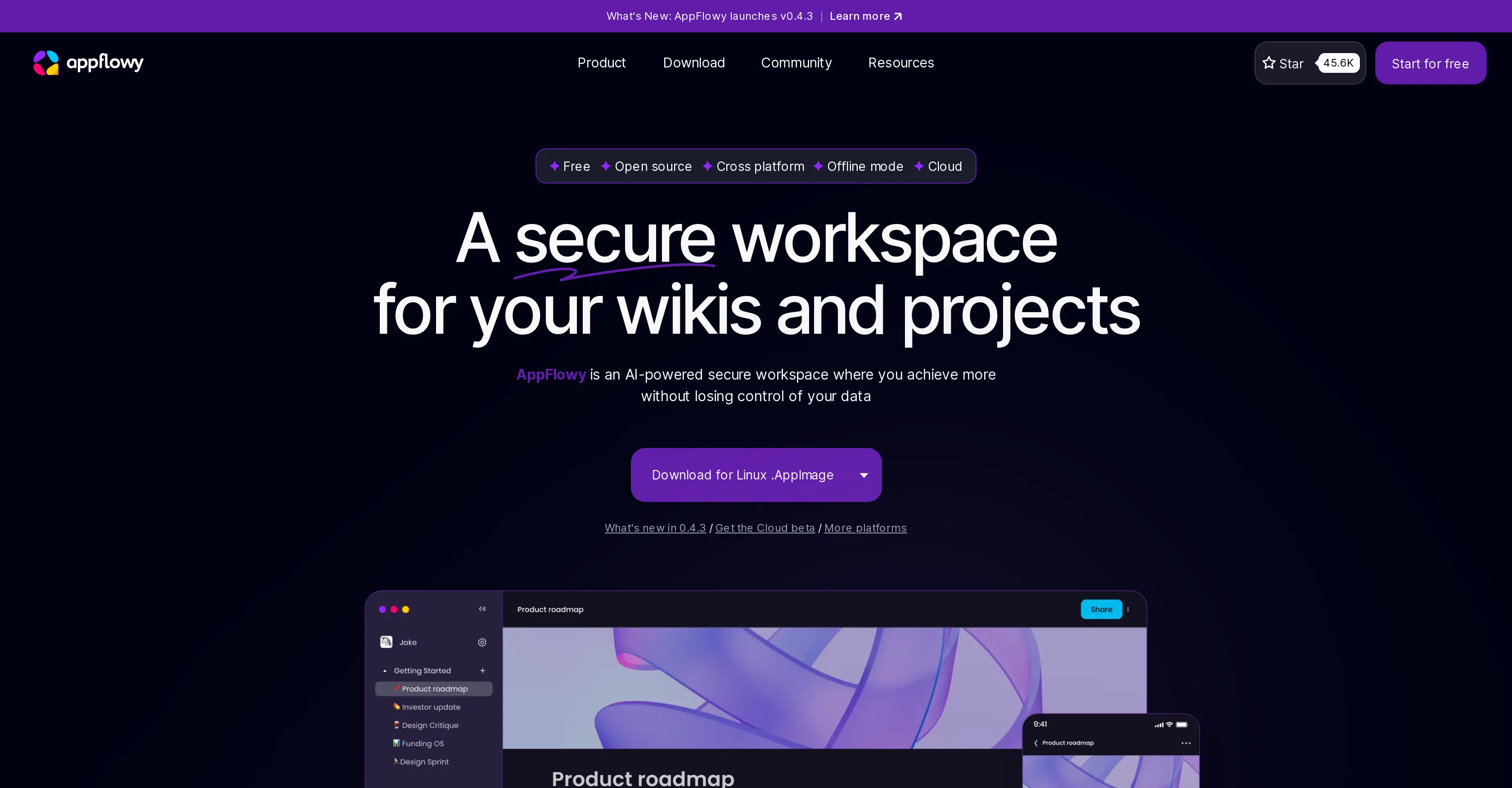
AppFlowy is an AI-powered, open-source workspace application designed to centralize personal and professional project management while prioritizing data privacy and user sovereignty. Developed as an alternative to proprietary tools, its core value lies in giving users complete control over their information, operating as a local-first application where data is stored on the user's device. It serves as a unified hub for managing notes, tasks, wikis, and databases, enabling seamless organization without relying on cloud services by default.
Key features include a flexible block-based editor for creating interconnected documents and notes, dynamic data visualization through linked databases that can be viewed as tables, Kanban boards, or calendars, and robust project tracking with task dependencies and reminders. The integrated AI assistant helps with writing, summarization, and idea generation directly within the workspace. Furthermore, it supports real-time collaboration for teams and offers end-to-end encryption for shared data, ensuring security during cooperative work.
What makes AppFlowy unique is its foundational commitment to privacy as an open-source, local-first tool, allowing for self-hosting and avoiding vendor lock-in. It is built with a portable architecture using Flutter, providing native performance and a consistent experience across Windows, macOS, Linux, iOS, and Android, including full offline functionality. The platform supports extensibility through community plugins and can integrate with cloud storage providers like Dropbox or WebDAV for optional synchronization, giving users the choice over their data flow.
Ideal for professionals, researchers, and teams who require a highly customizable and secure organization system outside of traditional SaaS ecosystems. Specific use cases include academic research management, where linking notes and sources is critical; software development project planning with agile boards; and personal knowledge management for individuals building a private, searchable second brain. It is particularly valuable for privacy-conscious users in regulated industries or those in regions with unreliable internet needing consistent offline access.