Arches AI
Explores and extracts insights from uploaded documents using AI-powered chatbot agents.
Are you the owner?
Claim this tool to publish updates, news and respond to users.
Sign in to claim ownership
Sign InDescription
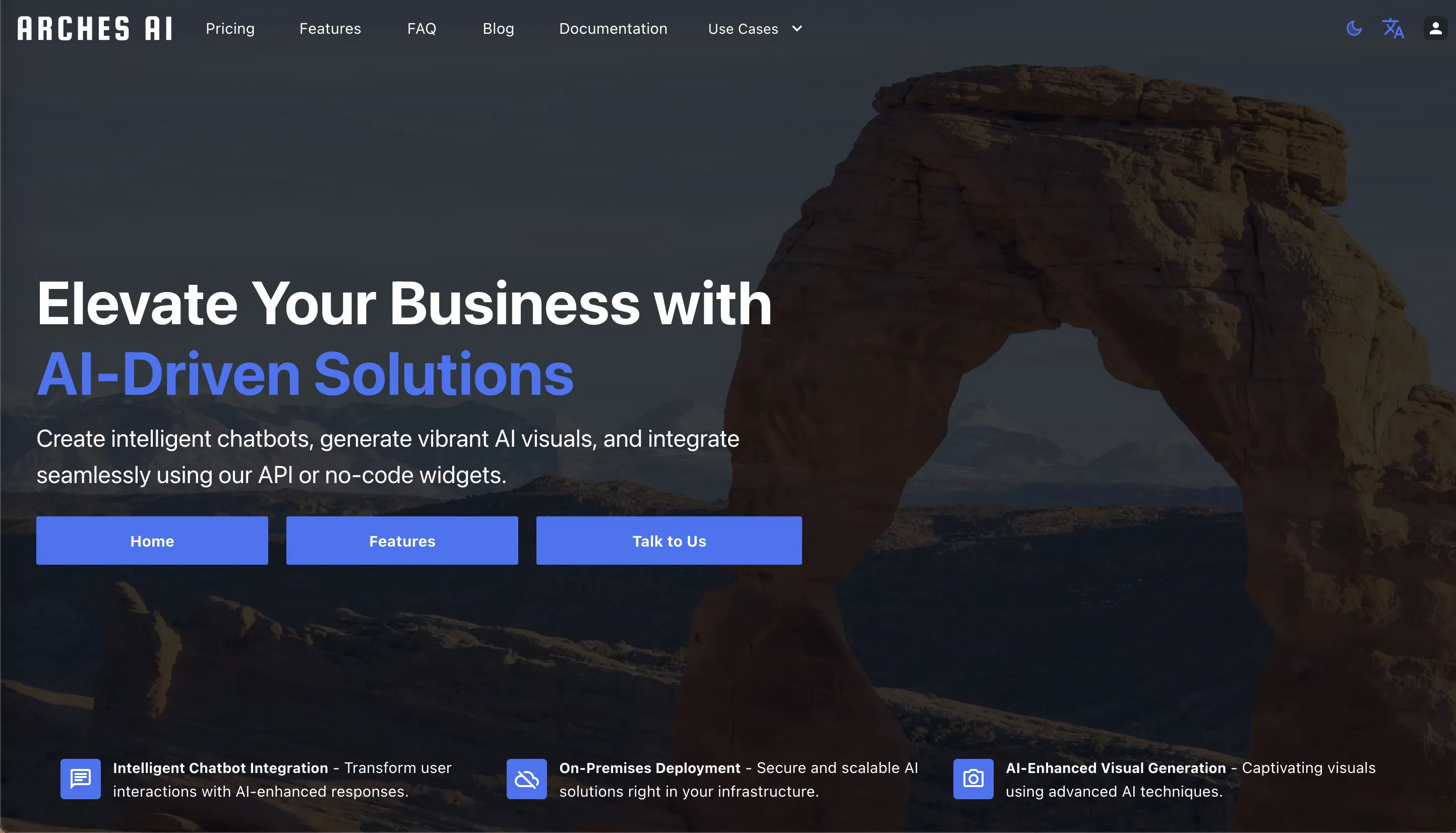
Arches AI is a specialized platform that revolutionizes how users interact with and extract value from text documents, created by a team focused on leveraging large language models for deep content exploration. Its core value lies in transforming static documents into interactive knowledge bases, allowing users to ask complex questions and receive precise, contextual answers derived directly from the uploaded material, thereby saving countless hours of manual reading and searching.
Key features include the ability to upload a wide variety of document formats, from PDFs and Word files to plain text, and then query them using natural language. The platform employs intelligent LLM agents that can perform deep semantic searches, summarize lengthy documents, compare information across multiple files, and extract specific data points like dates, names, or key arguments. It also supports conversational follow-ups, where the AI maintains context from previous questions to provide coherent and progressive insights throughout a research session.
What sets Arches AI apart is its dedicated focus on document intelligence rather than general web knowledge, ensuring answers are grounded solely in the user-provided content for accuracy and confidentiality. Technically, it utilizes advanced retrieval-augmented generation (RAG) to anchor responses in the source documents. The platform is web-based, requiring no local installation, and is designed for seamless use by individuals and teams, though specific API integrations for enterprise workflows are part of its development roadmap. Its architecture is built to handle large document sets while maintaining query performance and data security.
Ideal for researchers, analysts, legal professionals, and students who need to quickly synthesize information from extensive reports, academic papers, contracts, or historical archives. Specific use cases include conducting due diligence by analyzing multiple financial statements, preparing for case reviews by interrogating legal briefs, accelerating literature reviews for academic research, and enabling customer support teams to find answers in internal policy manuals instantly, all through a simple chat interface.