Ask by Slite
Answers questions and retrieves information directly from your Slite workspace knowledge base using AI.
Are you the owner?
Claim this tool to publish updates, news and respond to users.
Sign in to claim ownership
Sign InDescription
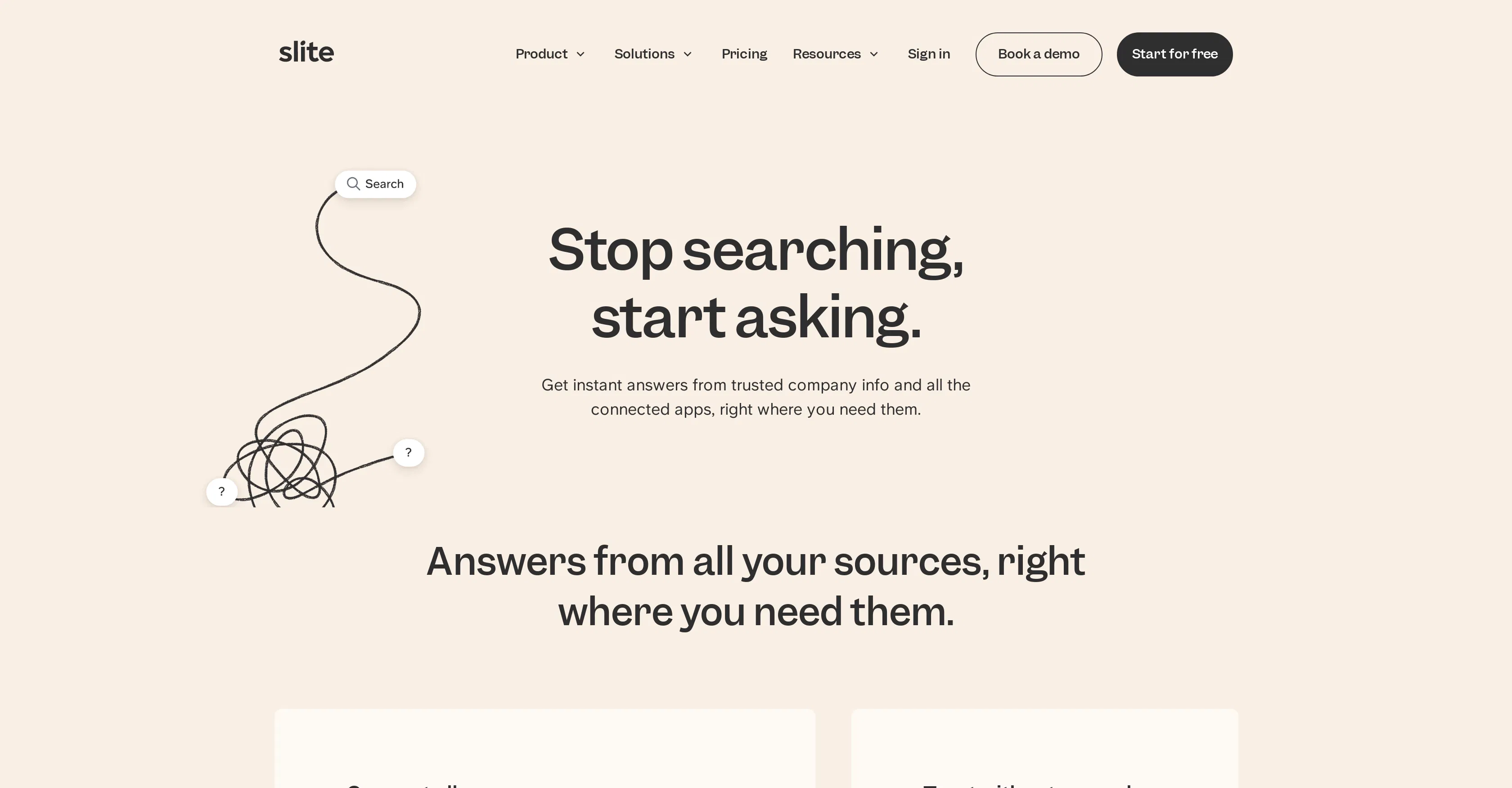
Ask by Slite is an AI-powered Q&A assistant built directly into the Slite collaborative workspace platform. Developed by Slite, its core value lies in instantly surfacing documented knowledge, eliminating time wasted searching through notes, documents, and past discussions. It acts as an intelligent layer over your team's collective information, making previously buried insights immediately accessible to anyone with permission.
Key features: The tool allows users to ask direct, natural language questions and receive concise, context-aware answers sourced from the team's Slite content. It can summarize lengthy documents, pinpoint specific information across channels and pages, and provide relevant links to source material for deeper exploration. Ask also integrates with external sources like Google Drive and Notion to pull information into its answers, creating a more comprehensive knowledge retrieval system.
What makes Ask unique is its deep integration within the Slite ecosystem; it understands the structure and context of your team's workspace. It operates on a retrieval-augmented generation (RAG) model, ensuring answers are grounded in your actual company data rather than generic web information. The tool is accessible via a simple command interface within Slite on web and desktop platforms, requiring no complex setup to start querying your existing documentation.
Ideal for teams and organizations that rely on Slite as their central knowledge hub and need to improve information discovery. Specific use cases include onboarding new employees who can ask questions instead of reading entire manuals, support teams quickly finding solution documentation, and project teams retrieving decisions and action items from past meeting notes without manual digging. It is particularly valuable for remote and hybrid teams where asynchronous access to institutional knowledge is critical for productivity.