
Atlas.org
Provides interactive data visualizations and educational content on global development metrics.
Are you the owner?
Claim this tool to publish updates, news and respond to users.
Sign in to claim ownership
Sign InDescription
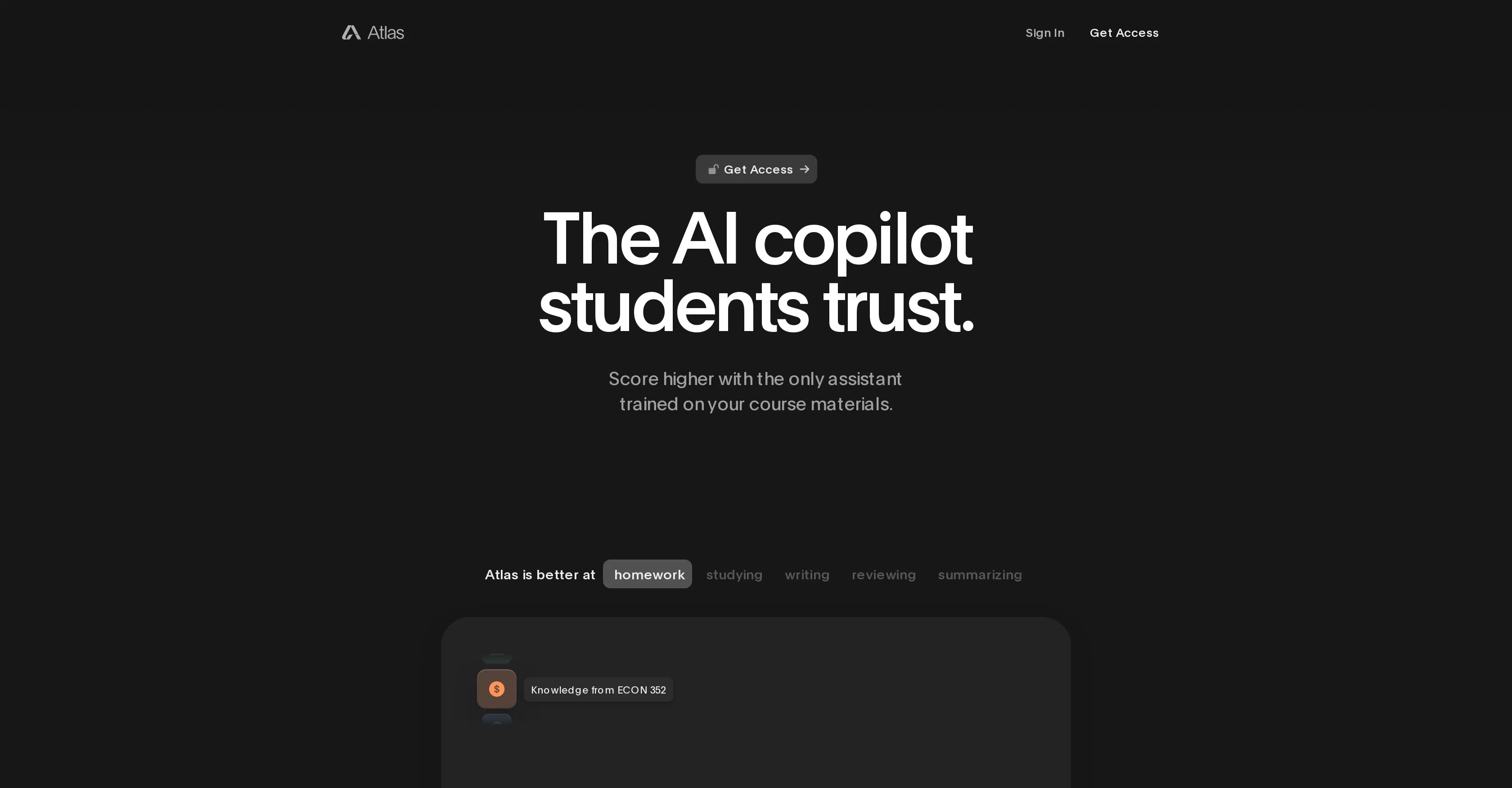
Atlas.org is a comprehensive online platform created by the Oxford Martin School that offers free access to a vast repository of data and research on global development, poverty, and environmental change. Its core value lies in transforming complex statistical information into clear, interactive visualizations and narratives, making critical research on humanity's biggest challenges accessible to students, educators, and the general public. The platform serves as a bridge between academic research and public understanding, empowering users to explore data-driven stories about the world's progress and ongoing issues.
Key features: The platform enables users to interact with hundreds of charts on topics like health, education, and economic growth, which can be embedded, downloaded, and customized. It provides in-depth articles and explainers that contextualize data trends, such as the history of global poverty or CO2 emissions. Users can also compare data across countries and over long historical timeframes, track progress towards the UN Sustainable Development Goals (SDGs), and access complete datasets for personal research and analysis.
What makes Atlas unique is its foundation on peer-reviewed research from leading academic institutions and its commitment to complete open access without paywalls. Technically, it is a web-based platform built for ease of use, requiring no specialized software. It integrates data from sources like the World Bank and UN, presenting it through a unified, user-friendly interface. The platform is designed to be a public good, focusing on clarity and educational value over commercial metrics, which distinguishes it from many data analytics tools.
Ideal for students and researchers in social sciences, economics, and environmental studies who need reliable data for papers and projects. It is equally valuable for journalists and policymakers seeking evidence-based context for reports and decisions, and for educators looking for compelling visual aids to teach complex global issues. Any curious individual wanting to understand factual trends in global development will find the platform an indispensable and freely available resource.