Brainner
Automates resume comparisons and candidate search to streamline recruitment workflows.
Are you the owner?
Claim this tool to publish updates, news and respond to users.
Sign in to claim ownership
Sign InDescription
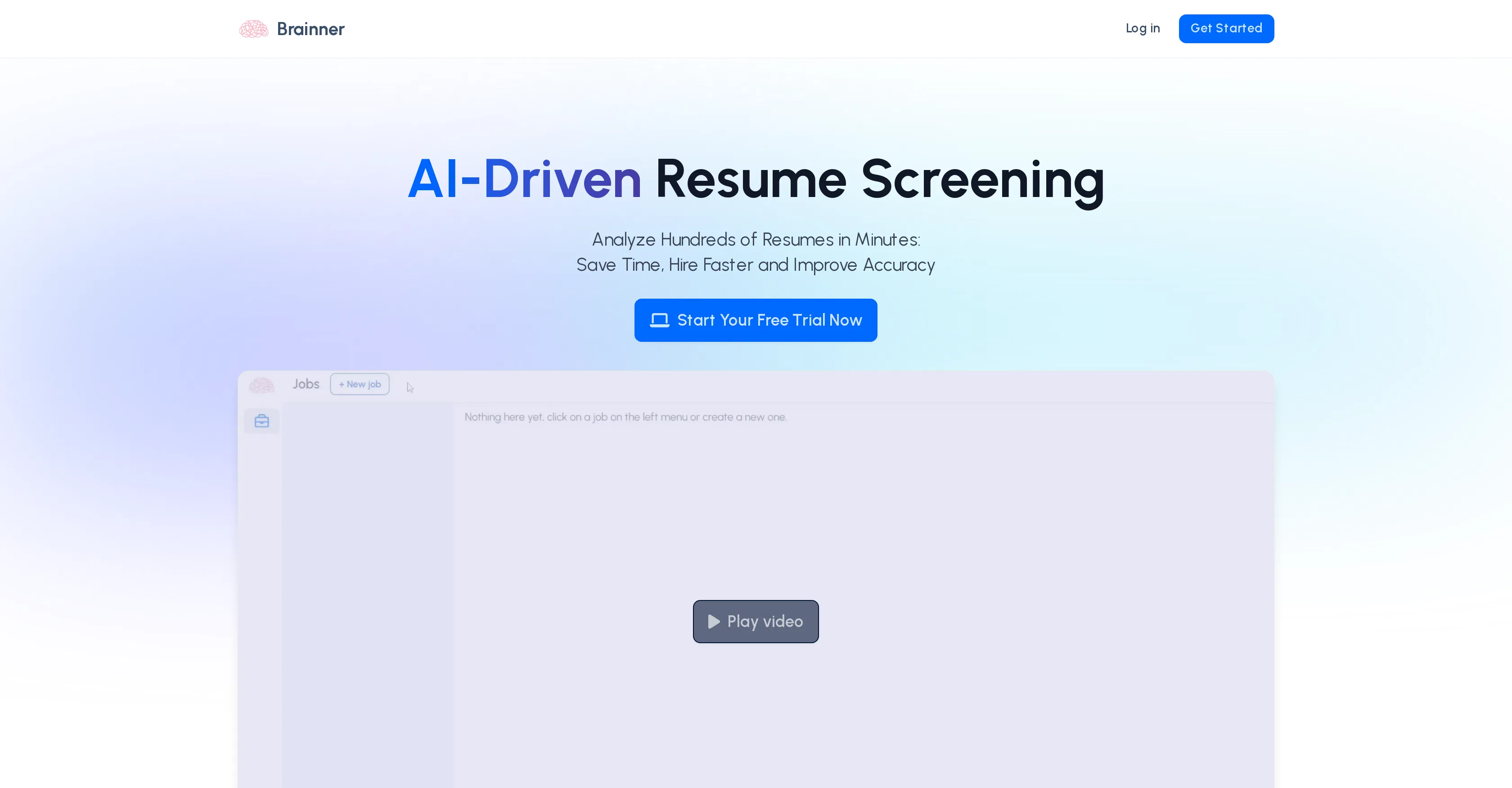
Brainner is an advanced AI-driven recruitment tool developed to significantly enhance the hiring process by automating the labor-intensive tasks of resume screening and candidate matching. Its core value lies in drastically reducing the time-to-hire and improving the quality of hires by leveraging artificial intelligence to analyze candidate data with precision and consistency, thereby allowing human resources professionals to focus on strategic decision-making and candidate engagement rather than manual sorting.
Key features include the ability to screen hundreds of resumes in minutes against specific job descriptions, perform intelligent candidate searches across databases, rank applicants based on fit and potential, and generate detailed comparative reports. The tool also offers automated communication triggers for candidates and provides analytics dashboards to track recruitment funnel metrics, giving teams actionable insights into their hiring efficiency and pipeline health.
What sets Brainner apart is its deep integration capability with leading HR software and Applicant Tracking Systems (ATS), ensuring a seamless workflow without disrupting existing tech stacks. The platform utilizes sophisticated natural language processing and machine learning algorithms to understand context, skills, and experience beyond simple keyword matching. It is accessible as a web-based platform, ensuring compatibility across devices, and is designed with data security and compliance standards in mind for handling sensitive candidate information.
Ideal for recruiters, talent acquisition specialists, and HR departments in companies of all sizes, from startups to large enterprises, that need to scale their hiring efficiently. Specific use cases include high-volume recruitment for seasonal positions, technical hiring where specific skill sets are critical, and organizations aiming to reduce unconscious bias in the initial screening phases by relying on data-driven assessments.