BrowseWiki
Saves and organizes web pages into a structured personal knowledge base for research.
Are you the owner?
Claim this tool to publish updates, news and respond to users.
Sign in to claim ownership
Sign InDescription
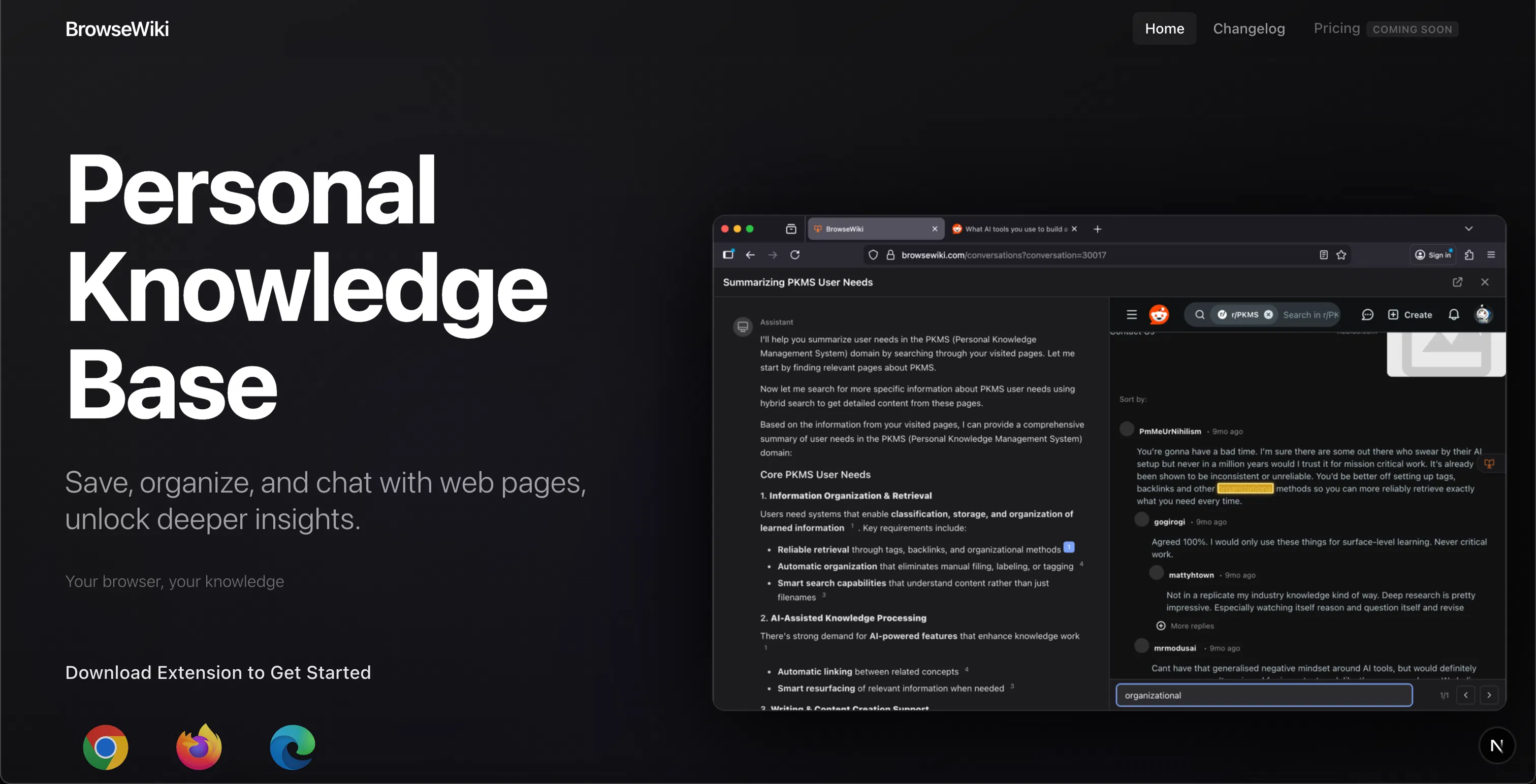
BrowseWiki is an AI-powered research assistant and personal knowledge base designed to streamline the process of gathering and managing online information. It provides a centralized platform where users can save, annotate, and structure web content related to their projects, effectively turning scattered online data into a coherent, searchable repository. The core value proposition lies in its ability to enhance research efficiency by reducing the time spent on information fragmentation and improving the organization of source materials, making it an invaluable tool for students, academics, and professionals engaged in deep-dive analysis.
Key features include the ability to save web pages with a single click, automatically extracting and storing key content for offline access. It offers robust organization through customizable folders, tags, and linking between saved entries, enabling users to build a web of connected ideas. The tool supports highlighting and note-taking directly on saved pages, and its AI can assist in summarizing content or generating insights from the collected materials. Furthermore, it provides powerful full-text search across the entire knowledge base to instantly locate any saved information.
What makes BrowseWiki unique is its focus on creating a structured, relational knowledge graph from saved web content, rather than just a simple bookmark list. Technically, it leverages AI to understand the context and connections between different saved items, suggesting relevant links and helping users see the bigger picture of their research. It operates primarily as a web application and browser extension, ensuring seamless integration into the browsing workflow without requiring complex setups or significant changes to existing habits.
Ideal for researchers, PhD students, and content creators who need to systematically collect and synthesize information from numerous online sources. Specific use cases include compiling literature reviews for academic papers, conducting competitive analysis for business projects, gathering inspiration and references for long-form writing, or maintaining a personal learning wiki on complex topics where information evolves rapidly across different websites and publications.