
Fin
Resolves complex customer service queries with high-quality AI-driven answers and continuous learning.
Are you the owner?
Claim this tool to publish updates, news and respond to users.
Sign in to claim ownership
Sign InDescription
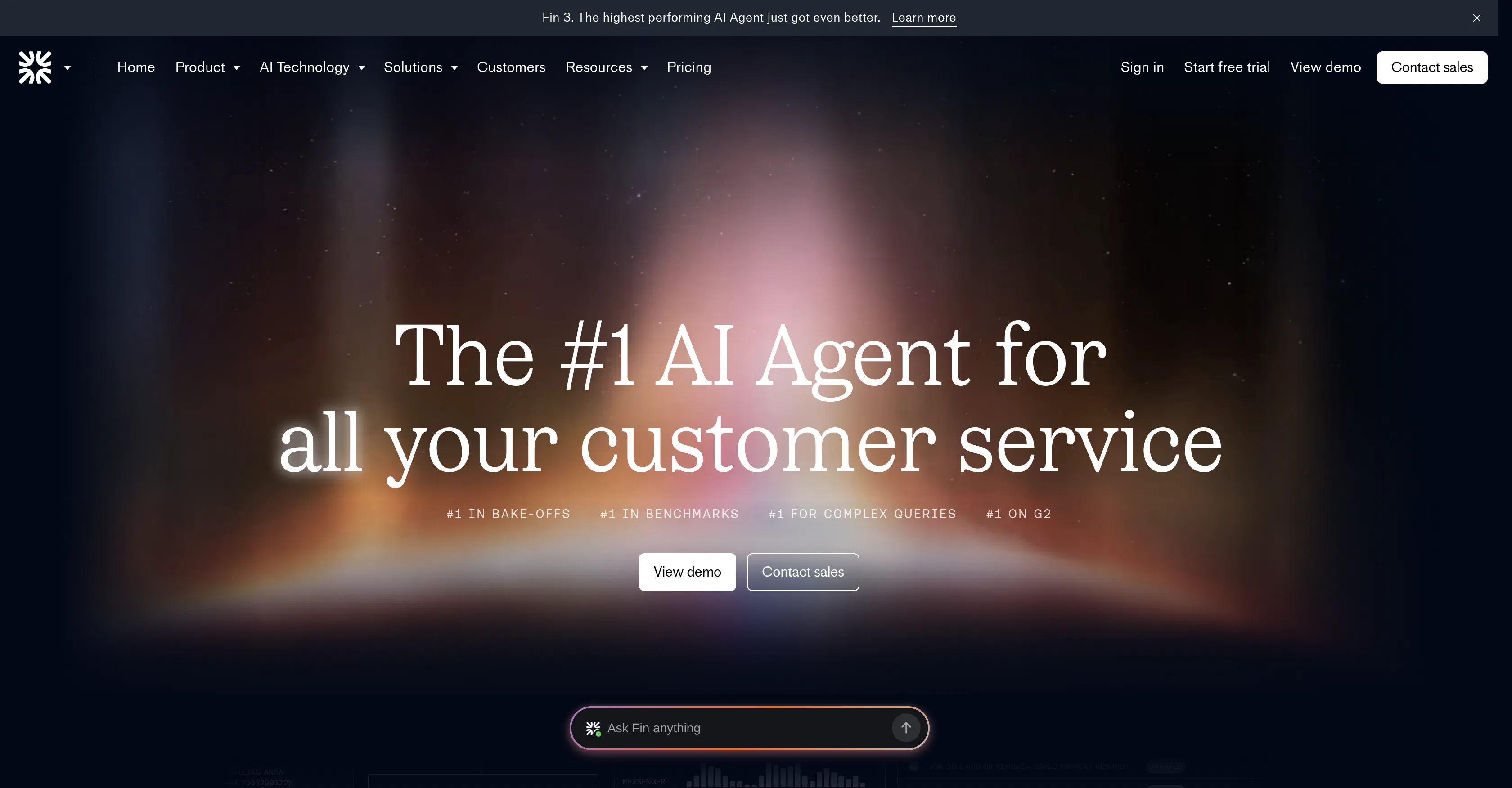
Fin is an AI agent engineered specifically for customer service, developed by the team at Fin AI. Its primary value lies in delivering exceptionally high-quality, accurate responses that resolve intricate customer issues, thereby reducing support ticket volume and improving customer satisfaction. The tool is designed to understand nuanced queries and provide solutions that feel human-like and contextually appropriate, making it a reliable first line of defense for support teams.
Key features include the ability to handle multi-turn conversations, integrate seamlessly with existing helpdesk software like Zendesk and Intercom, automatically escalate unresolved issues to human agents, and learn from past interactions to improve future responses. It can process natural language queries across various support channels, including email, live chat, and messaging platforms, ensuring consistent service quality. Furthermore, it offers detailed analytics on query resolution rates and customer sentiment, providing actionable insights for support managers.
What makes Fin unique is its proprietary continuous improvement framework, known as the Fin Flywheel. This system involves training the AI agent on a company's specific processes, knowledge bases, and historical support tickets, creating a feedback loop that perpetually enhances its accuracy and relevance. Technically, it leverages advanced large language models fine-tuned for customer service domains, ensuring reliability and reducing hallucinations. It operates as a cloud-based platform with robust API access for custom integrations, supporting deployment across web and mobile applications without requiring extensive technical overhead from the client's side.
Ideal for e-commerce businesses, SaaS companies, and any organization with a high volume of customer inquiries seeking to automate their support operations efficiently. Specific use cases include handling product return requests, troubleshooting technical issues, providing order status updates, and answering frequently asked questions from knowledge bases, allowing human agents to focus on more complex and sensitive customer interactions that require a personal touch.