Food Shell AI
Analyzes food photos to provide detailed nutritional information and calorie counts instantly.
Are you the owner?
Claim this tool to publish updates, news and respond to users.
Sign in to claim ownership
Sign InDescription
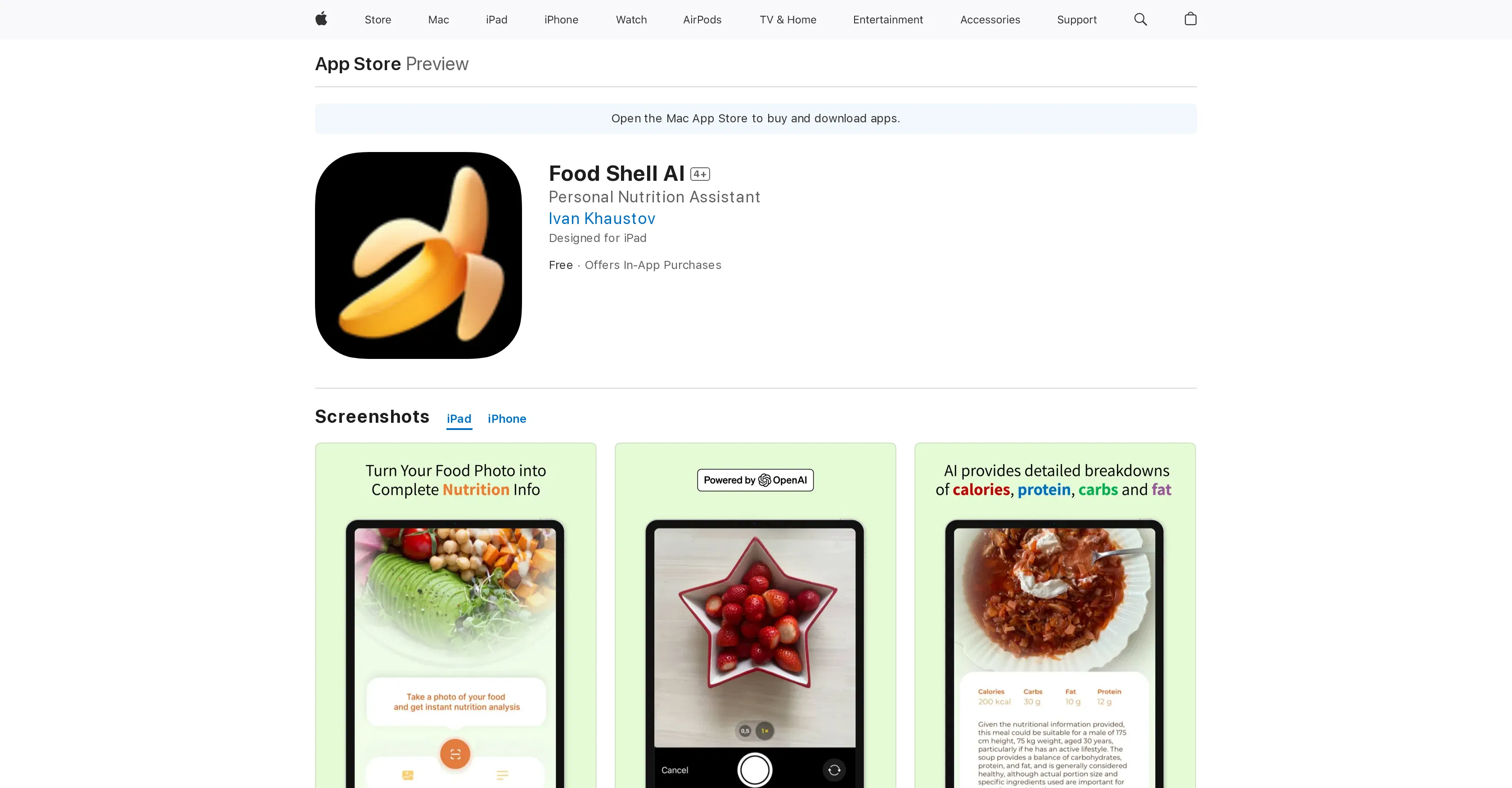
Food Shell AI is a mobile application that uses artificial intelligence to instantly analyze photographs of food and provide detailed nutritional breakdowns. Developed for health-conscious individuals and those managing dietary goals, its core value lies in eliminating the tedious manual logging of meals, offering a quick, visual-based method to understand the caloric and macronutrient content of consumed foods. This tool simplifies nutrition tracking, making it more accessible and less time-consuming for anyone from casual dieters to fitness enthusiasts.
Key features include the ability to scan any meal from a photo, automatically identifying food items and portion sizes to calculate calories, proteins, fats, and carbohydrates. The app generates comprehensive nutritional labels similar to those found on packaged goods, offers historical tracking of daily and weekly dietary intake, and provides insights and summaries about eating patterns. It supports a vast database of common foods and dishes, allowing for accurate recognition of complex meals and mixed plates without requiring manual ingredient entry.
What sets Food Shell AI apart is its focus on visual analysis as the primary input method, leveraging advanced computer vision models specifically trained on food imagery to estimate portions and ingredients from a single image. The application operates as a native iOS app, ensuring optimized performance and integration with Apple's ecosystem, including potential health data synchronization. Its technical backbone involves machine learning algorithms that continuously improve recognition accuracy based on user contributions and a growing food database, though it does not currently integrate with third-party fitness platforms.
Ideal for individuals actively managing their weight, athletes monitoring macronutrient intake for performance, or people with specific dietary requirements who need a convenient logging solution. Specific use cases include quickly assessing the calorie content of a restaurant meal, tracking protein intake throughout a bodybuilding regimen, or gaining a better understanding of personal eating habits without the burden of manual journaling. It is also useful for nutritionists and dieticians who may recommend it as a client tool for simplified food diary maintenance.