Glaze by Raycast
Build custom team applications for Mac by working with files and tools.
Are you the owner?
Claim this tool to publish updates, news and respond to users.
Sign in to claim ownership
Sign InDescription
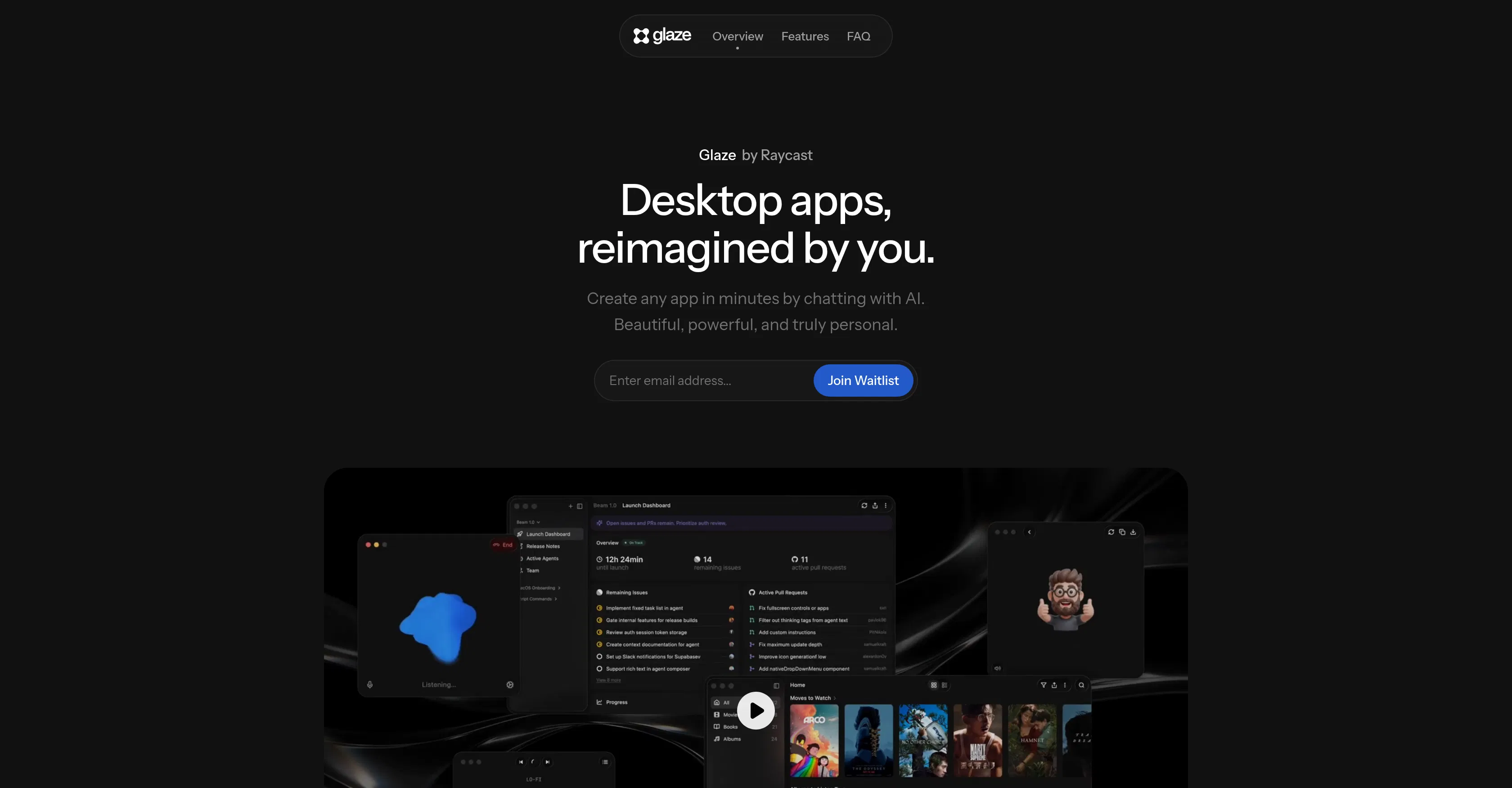
Glaze by Raycast is an innovative tool for creating custom applications on macOS, developed by the team behind the popular Raycast launcher. It allows technical specialists and teams to quickly assemble specialized interfaces for working with files, data, and internal tools without diving into full-scale development. The main value of the service lies in radically accelerating the creation of utilitarian desktop applications for internal needs, leveraging the familiar Raycast ecosystem.
Key features: creating standalone windowed applications from Raycast scripts or plugins, working with the file system (viewing, searching, batch processing), integration with third-party service APIs and internal systems through ready-made extensions. With it, you can, for example, quickly build an application for checking deployment status, an internal dashboard for monitoring metrics, or a utility for converting and processing local files according to specified rules. Technically, this is achieved by packaging the logic of Raycast extensions into native macOS windows with their own icons and menus.
The uniqueness of Glaze lies in its use of the existing, rich Raycast extension ecosystem, which boasts thousands of plugins, providing a starter set of components for building applications. Unlike universal frameworks like Electron, it focuses on ultra-fast development of highly specialized tools with minimal boilerplate code. The service offers a simple CLI and API for building, and the created applications are native to macOS, ensuring high performance and system integration.
Ideal for internal tools engineers, DevOps specialists, team leads, and technical managers who need to automate routine workflows and provide colleagues with convenient graphical interfaces for complex scripts. Specific scenarios include creating personal clients for internal microservices, admin panels for teams, utilities for local development, or simple CRMs for small departments.