
Glo
Provides conversational AI shopping assistance to boost e-commerce conversion rates and reduce cart abandonment.
Are you the owner?
Claim this tool to publish updates, news and respond to users.
Sign in to claim ownership
Sign InDescription
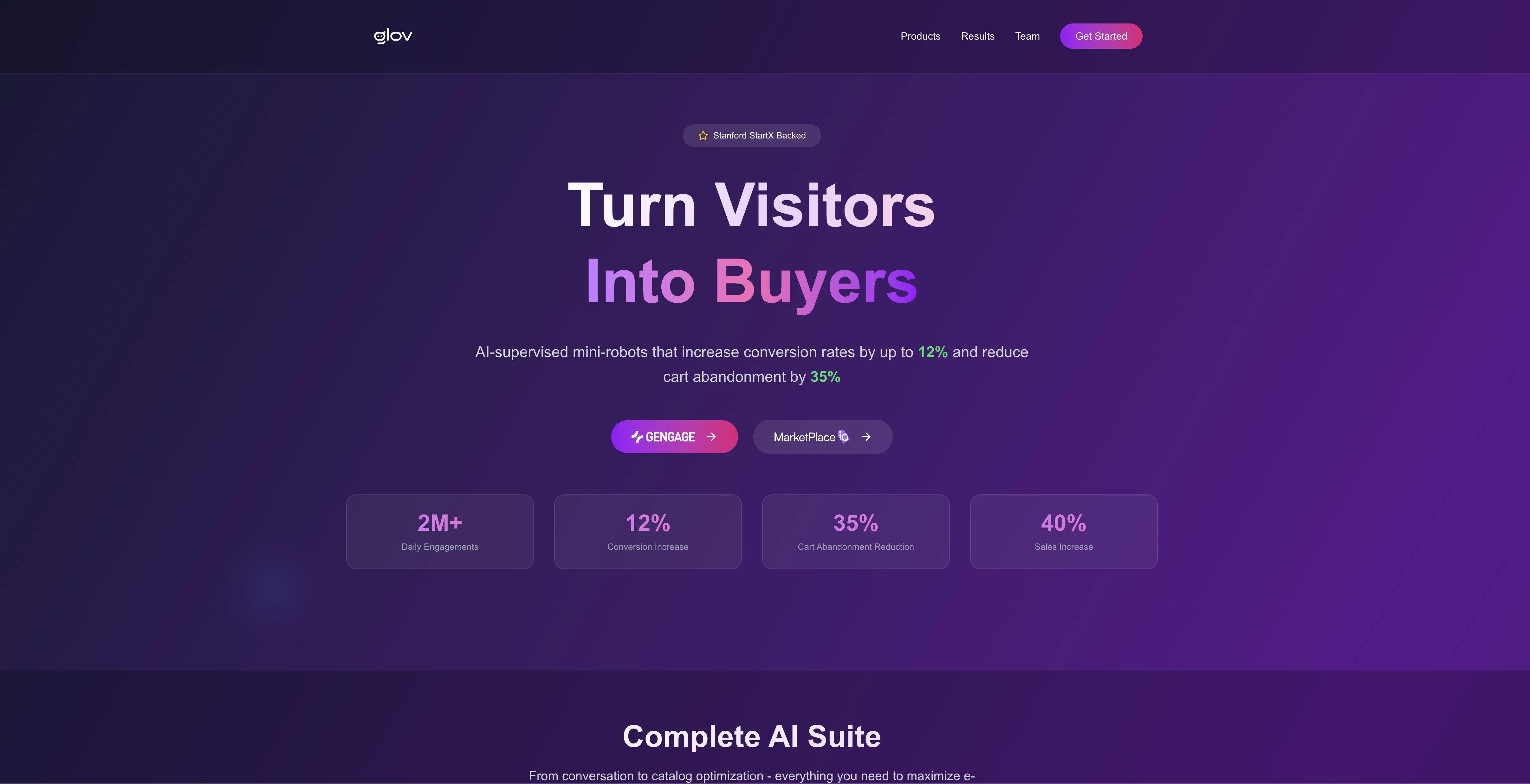
Glo is a conversational AI assistant specifically engineered for the e-commerce sector, developed by the team at Glov.ai. Its primary value lies in transforming the online shopping experience from a static, search-based interaction into a dynamic, intuitive dialogue, directly addressing the high abandonment rates and low conversion challenges endemic to digital retail. By simulating a helpful in-store assistant, it guides customers through product discovery, questions, and recommendations in a natural, conversational manner.
Key features: The assistant initiates proactive, context-aware shopping conversations based on user behavior and page content. It can answer complex product questions in real-time by drawing from the store's catalog and knowledge base. The tool provides personalized product recommendations and comparisons to help users make confident decisions. It is designed to handle objections and offer incentives to recover potentially abandoned carts. Furthermore, it seamlessly integrates the conversational flow with core e-commerce actions like adding items to the cart or applying discount codes.
What makes Glo unique is its singular focus on the nuanced sales funnel of e-commerce, rather than being a generic customer service chatbot. It employs specialized AI models trained on shopping dialogues to understand intent, product attributes, and purchase hesitations. Technically, it operates as a web-based widget that can be deployed on any e-commerce platform without extensive coding, typically via a simple JavaScript snippet. It integrates with major e-commerce backends like Shopify, WooCommerce, and Magento to access live inventory, pricing, and order data, ensuring all conversations are accurate and actionable.
Ideal for online store owners, e-commerce managers, and digital retailers across various industries who seek to automate and personalize the final stage of the customer journey. Specific use cases include deploying it on high-value product pages to answer technical specifications, using it on category pages to help users filter and find the right item, and activating it in the checkout process to answer last-minute shipping or payment questions, thereby securing the sale. It is particularly valuable for stores with complex products or large catalogs where customers need guided assistance.