Grapha AI
Explores and analyzes complex datasets using AI to reveal hidden trends and transform data into clear insights.
Are you the owner?
Claim this tool to publish updates, news and respond to users.
Sign in to claim ownership
Sign InDescription
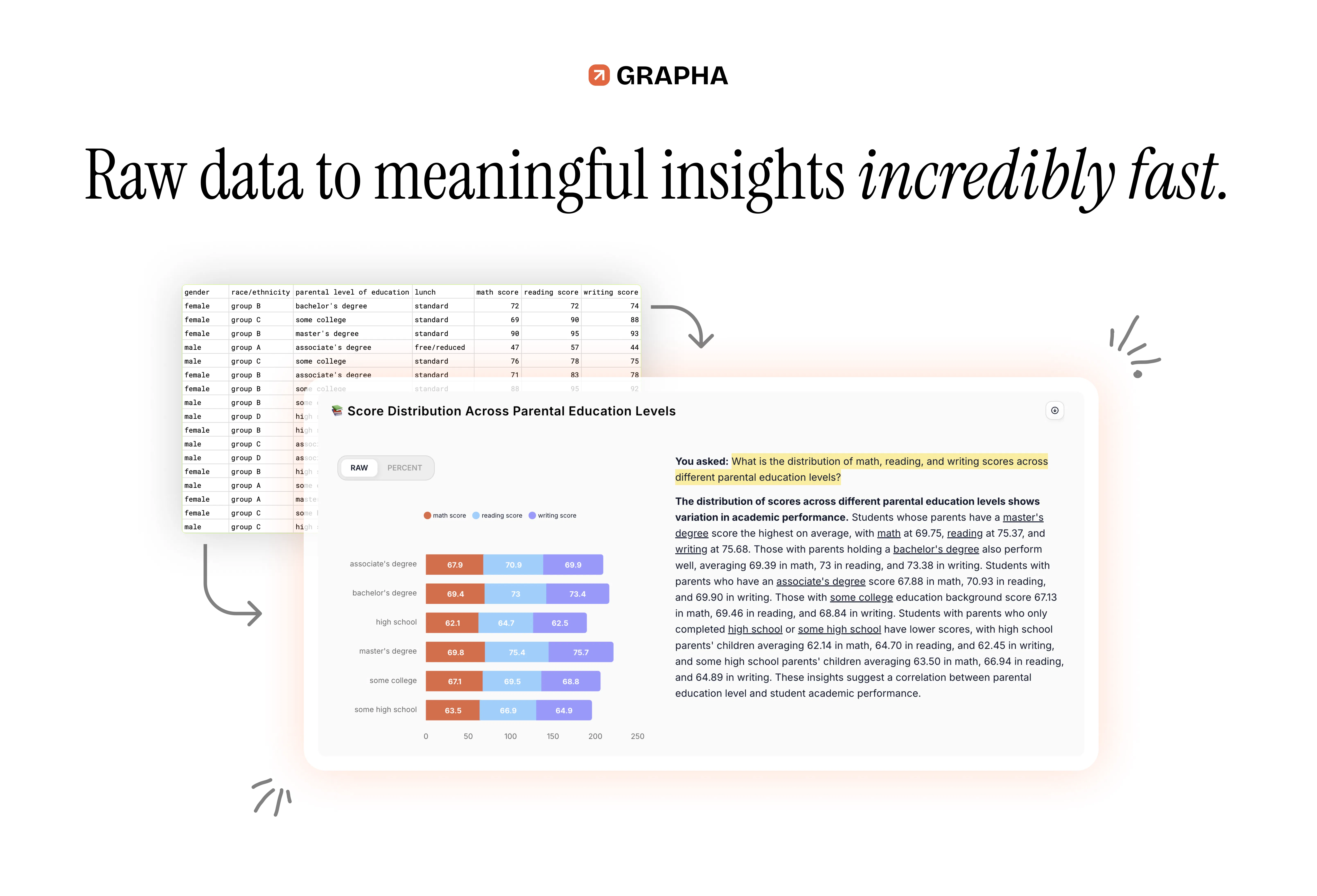
Grapha AI is an AI-driven data exploration and analysis platform designed to help users interpret complex datasets. It functions as a powerful tool built on established data science practices, deploying advanced AI technology to automatically sift through information, uncover hidden patterns, and translate raw data into actionable, clear insights. The core value proposition lies in its ability to democratize sophisticated data analysis, making it accessible to professionals who may not have deep technical expertise in data science, thereby accelerating the discovery process and supporting data-informed decision-making.
Key features include automated data exploration that scans datasets for correlations and anomalies, natural language querying allowing users to ask questions about their data in plain English, predictive analytics for forecasting trends based on historical data, and interactive visualization tools that generate charts and graphs to illustrate findings clearly. The platform also offers automated report generation to summarize insights and collaborative workspaces for teams to share analyses and build upon each other's work, streamlining the entire analytical workflow from raw data to shared understanding.
What sets Grapha AI apart is its focus on an intuitive, conversational interface that lowers the barrier to entry for complex analysis. Technically, it leverages machine learning models for pattern recognition and predictive tasks, operating as a cloud-based web application accessible from any modern browser. It supports integrations with common data sources and business tools, facilitating easy data import and export, and is built with scalability in mind to handle growing datasets. The platform's unique selling point is its blend of automated discovery with user-guided exploration, providing both broad overviews and the ability to drill down into specific details.
Ideal for business analysts, marketing teams, product managers, and researchers who regularly work with data but seek to reduce the time and technical skill required for deep analysis. Specific use cases include analyzing customer behavior data to identify churn risks, exploring sales figures to uncover regional performance trends, processing survey results to extract key sentiment themes, and monitoring operational metrics to spot inefficiencies. It serves as a force multiplier for any professional or team needing to derive reliable insights from their data more efficiently and with greater clarity.