Julius
Analyzes structured data from spreadsheets and CSV files to create visual charts and uncover key trends through conversational queries.
Are you the owner?
Claim this tool to publish updates, news and respond to users.
Sign in to claim ownership
Sign InDescription
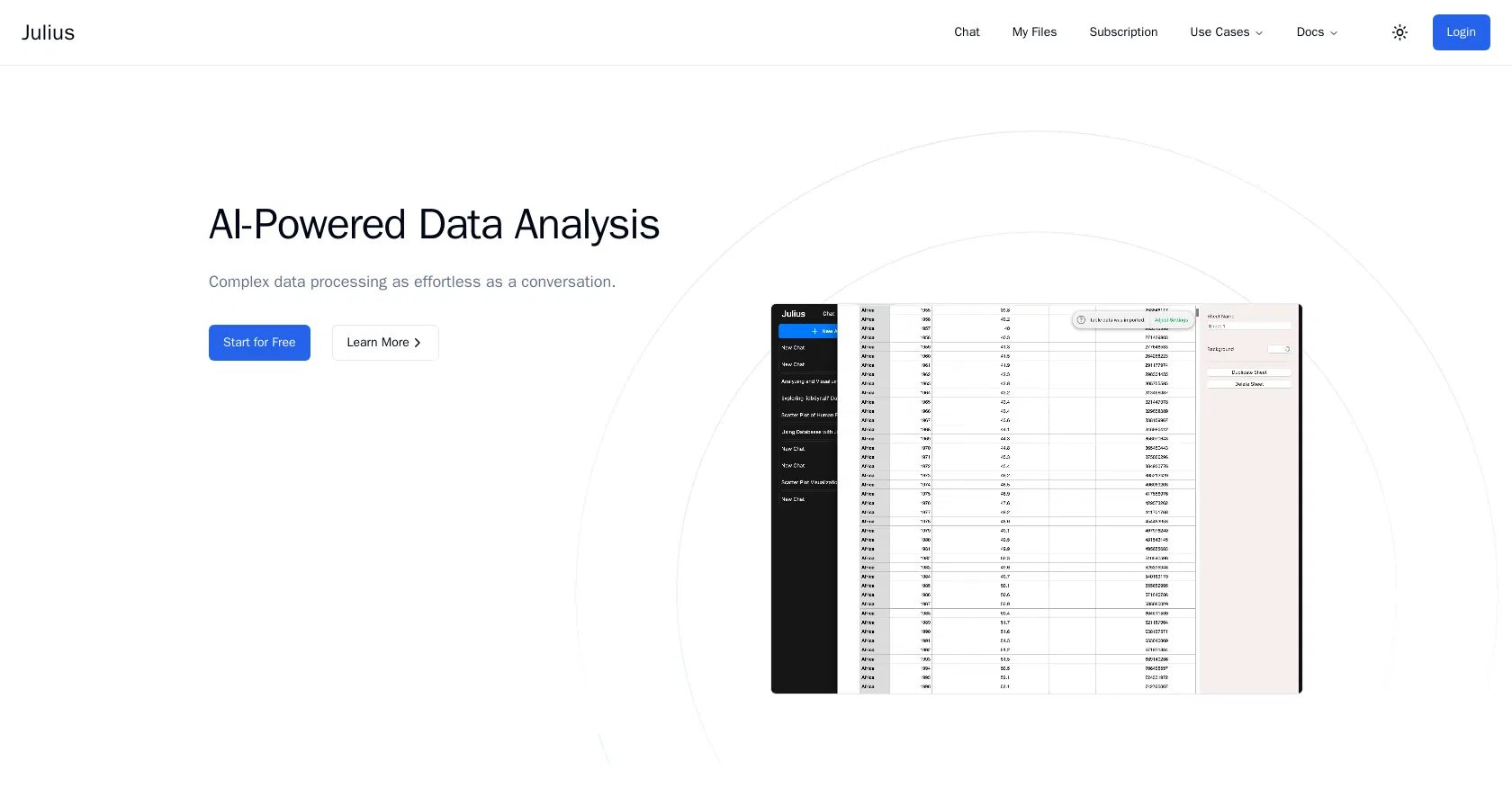
Julius is an AI-powered data analysis assistant created to democratize insights from structured data. It allows users, regardless of their technical expertise, to upload spreadsheets, Excel files, or CSVs and simply ask questions about their data in natural language. The core value lies in transforming raw numbers into clear, actionable visualizations and summaries, making complex data analysis accessible and efficient for a broad audience.
Key features: The tool can perform a wide range of analytical tasks, including generating various chart types like bar graphs, line charts, and scatter plots directly from the data. It conducts statistical analysis to identify trends, correlations, and outliers. Users can ask follow-up questions to drill deeper into specific insights, and the AI can provide written explanations and summaries of its findings, contextualizing the numbers in plain English.
What sets Julius apart is its conversational, chat-based interface that removes the steep learning curve of traditional business intelligence software. It operates as a web application, requiring no complex setup or coding knowledge. The AI handles the data processing, formula application, and visualization logic internally, allowing the user to focus solely on asking the right questions. It is designed for quick, iterative exploration rather than building permanent dashboards.
Ideal for business analysts, marketers, researchers, and students who need to quickly make sense of data without writing SQL or mastering tools like Tableau. Specific use cases include analyzing sales performance from monthly reports, interpreting survey results for market research, cleaning and summarizing experimental data for academic projects, and preparing visual evidence for business presentations or reports to support data-driven decisions.