Kaba
Embeds AI at the core of a hybrid operating system to enhance intelligence across digital and physical environments.
Are you the owner?
Claim this tool to publish updates, news and respond to users.
Sign in to claim ownership
Sign InDescription
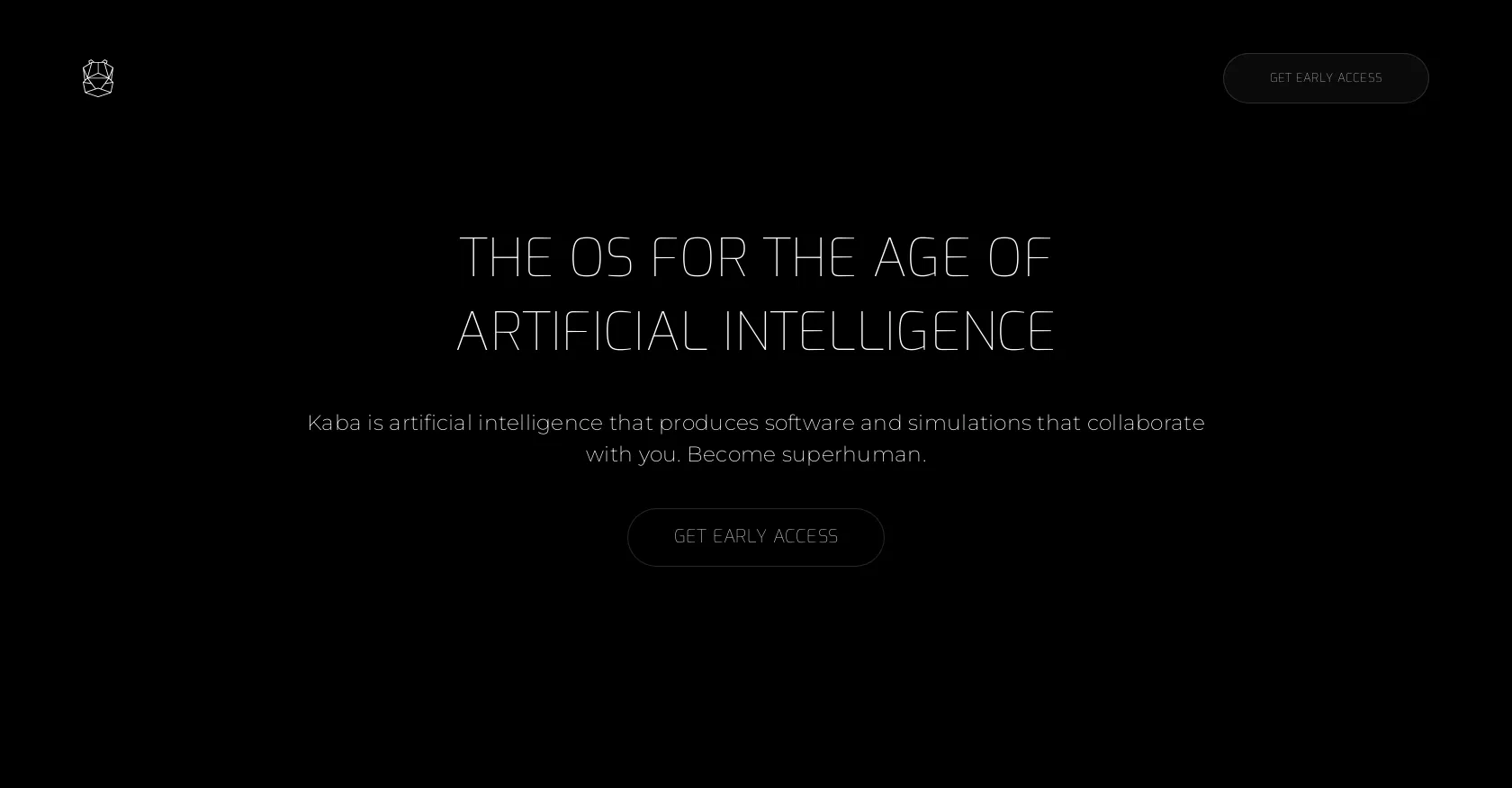
Kaba is an AI-native operating system designed to fundamentally enhance the intelligence and creativity of both digital and physical worlds. Developed by Kaba AI, its core value proposition lies in moving beyond treating artificial intelligence as a mere application or add-on, instead architecting it as the foundational layer of the system itself. This approach aims to create a seamless, intelligent substrate that can understand, anticipate, and act upon user needs and environmental contexts more holistically than traditional platforms.
Key features include a unified interface for managing AI agents and workflows, deep integration of generative and reasoning models directly into system processes, and the ability to orchestrate tasks across both software applications and connected physical devices. The system provides tools for creating custom AI-driven automations, offers real-time contextual assistance, and facilitates collaborative intelligence by connecting multiple AI entities. It also includes built-in capabilities for data synthesis and analysis, turning disparate information streams into actionable insights.
What makes Kaba unique is its hybrid architecture, which is engineered from the ground up to support AI as its core operational paradigm, rather than retrofitting it onto existing structures. This allows for deeper, more efficient interaction between the user, the AI, and hardware resources. Technically, it likely runs on a microkernel or similar modern architecture optimized for AI workloads and security. It is designed to be platform-agnostic, potentially integrating with various devices and cloud services, and may offer APIs for developers to build AI-native applications that leverage its underlying intelligence layer.
Ideal for developers, researchers, and enterprises building the next generation of intelligent applications and smart environments. Specific use cases include creating complex, multi-agent AI systems for automation, developing context-aware smart office or home solutions, and conducting advanced AI research where tight integration between the OS and models is critical. It also serves innovators who require a unified platform to experiment with and deploy AI across digital and physical domains seamlessly.