
Kling
Generates artistic videos from text prompts with high fidelity and complex, lifelike motions.
Are you the owner?
Claim this tool to publish updates, news and respond to users.
Sign in to claim ownership
Sign InDescription
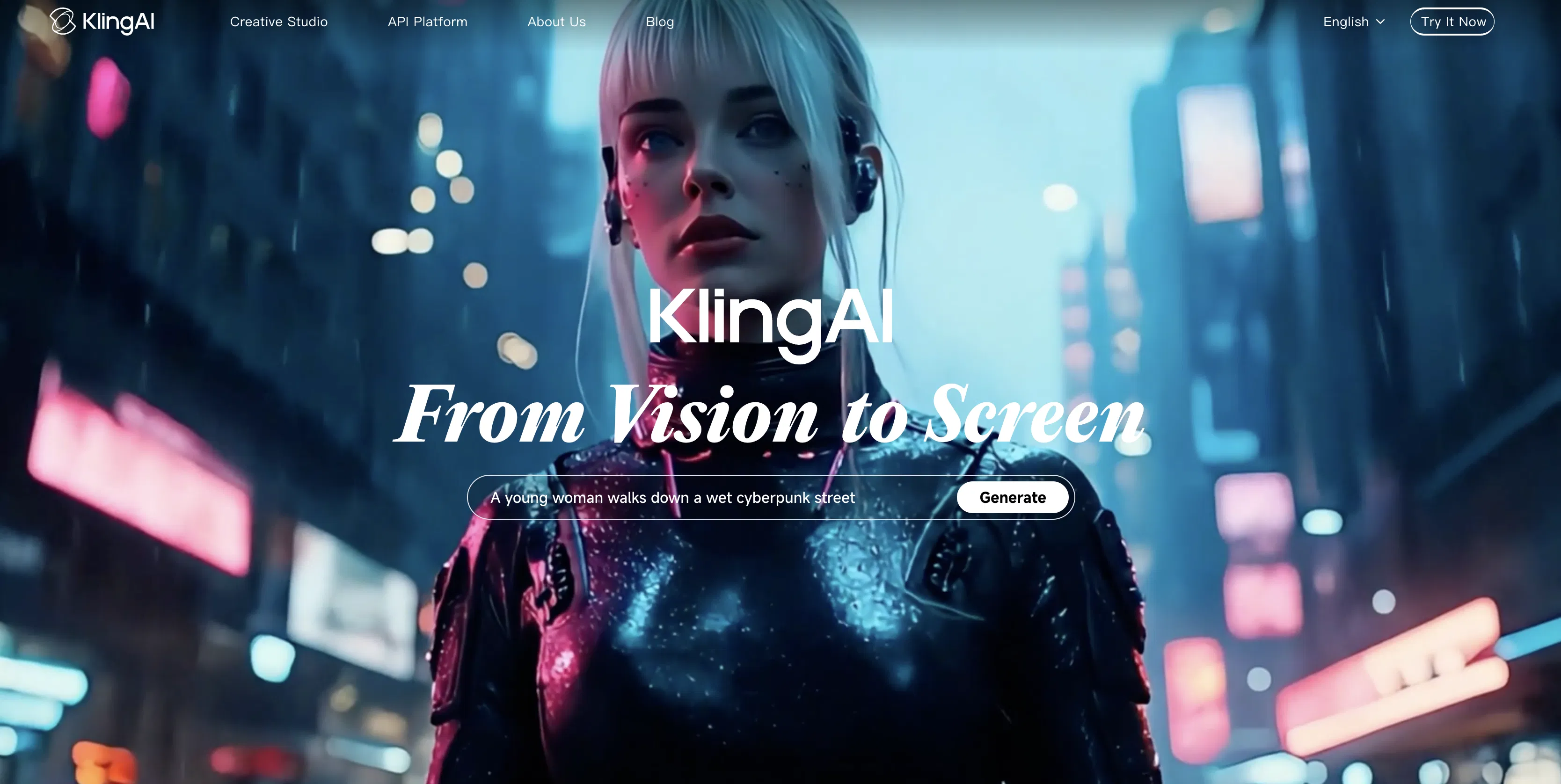
Kling is an advanced text-to-video AI tool developed by the Kuaishou AI Team, designed to transform textual descriptions into high-quality, artistic video content. Its primary value lies in its ability to produce videos with remarkable visual fidelity and intricate, natural-looking motion, bridging the gap between creative imagination and dynamic visual realization. This makes it a powerful asset for creators who need to quickly visualize concepts or stories without the extensive resources typically required for traditional video production.
Key features include the generation of lifelike large motions through sophisticated 3D spatio-temporal attention modules, which allow for complex character and object movements within scenes. The tool supports the creation of videos with consistent artistic styles and coherent narratives from simple prompts. It can handle detailed environmental descriptions and character actions, producing results that maintain temporal stability and visual quality throughout the clip. Additionally, it offers users control over various aspects of the generated video's composition and motion dynamics.
What sets Kling apart is its underlying architecture, specifically the 3D spatio-temporal attention mechanism that excels at modeling long-range dependencies in both space and time, resulting in more fluid and believable animations compared to earlier generative models. It is a web-based platform accessible through its official site, requiring no local installation, though specific API details or third-party integrations are typically outlined for developers on its platform. The technical focus on achieving complex, cinematic motions from text places it at the forefront of current AI video generation capabilities.
Ideal for digital artists, content creators, marketers, and storytellers who need to produce concept videos, animated shorts, or promotional content rapidly. Specific use cases include generating visual prototypes for film or game concepts, creating engaging social media clips, producing educational or explanatory animations, and visualizing narrative scenes for scripts or storyboards without the need for filming or complex 3D animation software.