
Lettria
Structures and analyzes textual data through a collaborative no-code AI platform for natural language processing.
Are you the owner?
Claim this tool to publish updates, news and respond to users.
Sign in to claim ownership
Sign InDescription
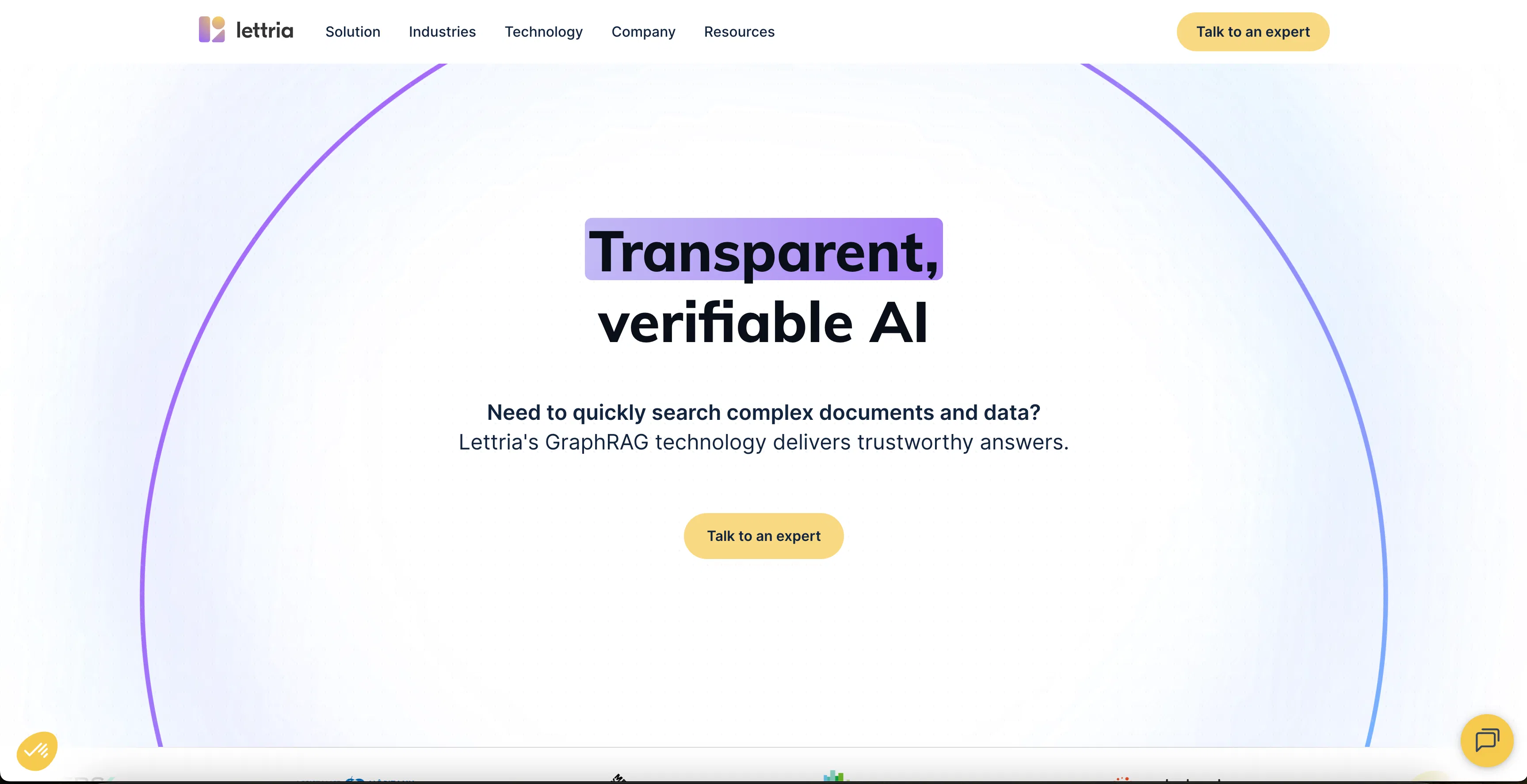
Lettria is a no-code AI platform designed to unlock the value of unstructured text data, created by a team focused on making advanced natural language processing accessible. Its core value lies in enabling teams to collaboratively build, deploy, and manage custom NLP models without writing a single line of code, thereby democratizing data analysis and turning raw text into structured, actionable insights.
Key features include an intuitive graphical interface for defining data extraction rules and training models, real-time collaborative annotation tools for teams to label datasets efficiently, pre-built connectors for importing data from various sources like documents and databases, and automated model training and validation pipelines that simplify the entire machine learning workflow. The platform also offers robust APIs for integrating processed data into existing business applications and dashboards for visualizing analysis results and model performance.
What sets Lettria apart is its emphasis on a collaborative, no-code environment tailored for domain experts rather than data scientists, allowing marketing, customer support, and research teams to directly harness NLP. Technically, it supports multiple languages and uses a combination of rule-based systems and machine learning for high accuracy. It operates as a cloud-based SaaS platform with strong API support for seamless integration into business intelligence tools, CRMs, and data warehouses, ensuring the processed data flows directly into operational systems.
Ideal for business analysts, market researchers, customer experience teams, and academic researchers who need to extract specific information from large volumes of documents, emails, surveys, or social media content. Specific use cases include automating the analysis of customer feedback to identify trends, extracting key clauses from legal contracts, categorizing support tickets by sentiment and topic, and processing open-ended survey responses to quantify qualitative data for reporting.