
Linkbot
Automatically creates internal links to enhance your website's SEO by analyzing content.
Are you the owner?
Claim this tool to publish updates, news and respond to users.
Sign in to claim ownership
Sign InDescription
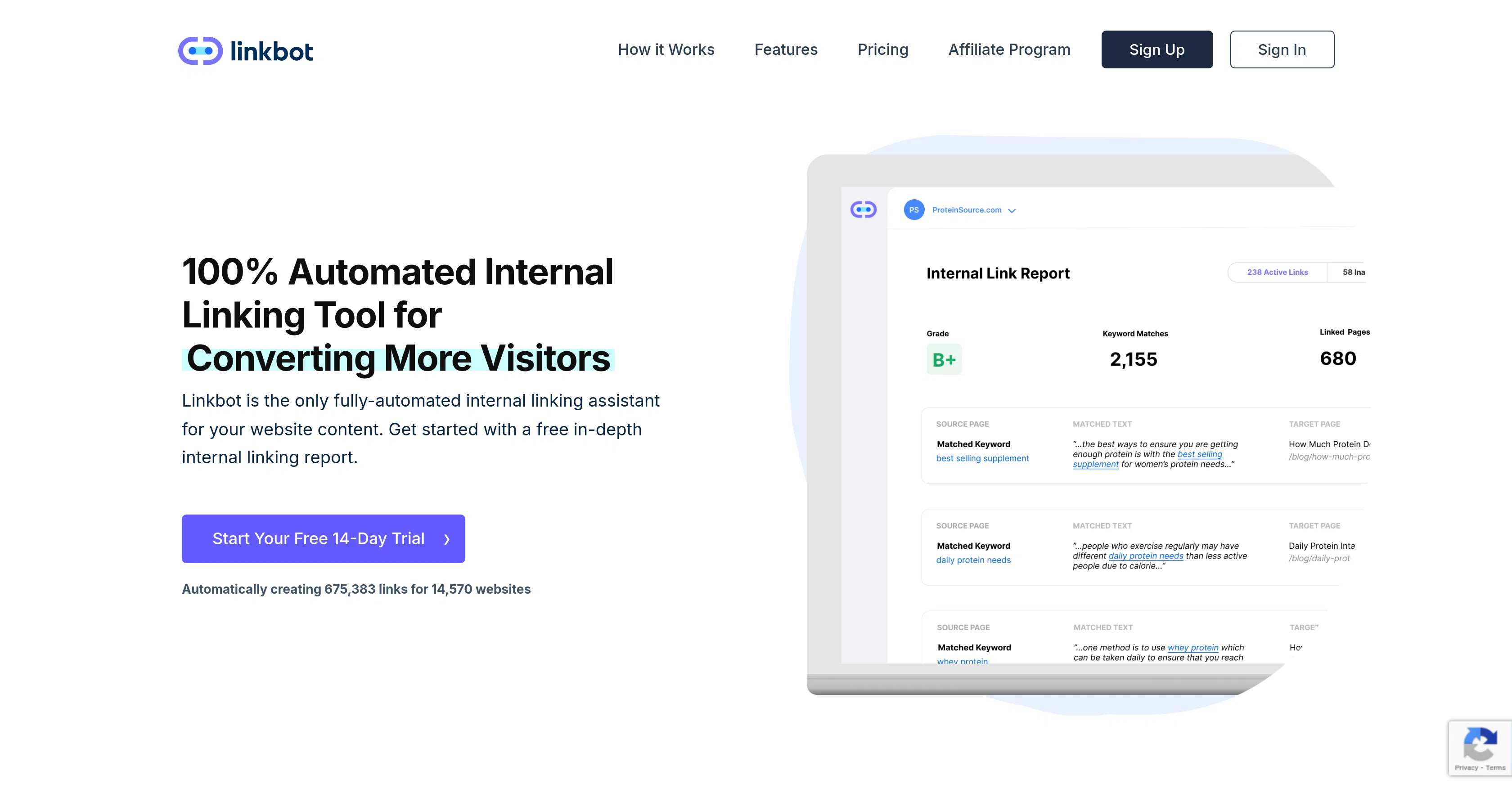
Linkbot is a fully-automated internal linking system designed to boost a website's search engine optimization. Developed by a team focused on SEO automation, its core value lies in digesting a site's existing content to intelligently create relevant internal links, thereby helping search engines better understand site structure and content relationships without requiring manual intervention from webmasters or SEO specialists. This process aims to improve crawl efficiency, distribute page authority, and ultimately enhance organic search rankings through a hands-off, content-aware approach.
Key features include the automatic discovery of linking opportunities across all site pages, the generation of contextual and semantically relevant anchor text, real-time content analysis to update links as new pages are published, and the provision of detailed analytics dashboards that track the impact of the created links on SEO metrics. The system also allows for the setting of specific rules or priorities to guide the linking strategy, ensuring alignment with broader marketing goals.
What makes Linkbot unique is its fully autonomous operation; once configured, it continuously works in the background. Technically, it integrates directly with websites, typically via a JavaScript snippet or a plugin for popular CMS platforms like WordPress, requiring no complex API setups for basic use. It employs natural language processing to understand content context, ensuring links are both valuable to users and recognized by search engine algorithms. The platform is cloud-based, accessible via a web dashboard.
Ideal for website owners, content managers, and digital marketers who manage content-rich sites like blogs, news portals, or e-commerce platforms and seek to improve their SEO foundation passively. Specific use cases include revitalizing old content by connecting it to newer articles, strengthening the topical authority of a site section, and simplifying the technical SEO workload for teams without dedicated SEO resources, allowing them to focus on content creation and other marketing activities.