Description
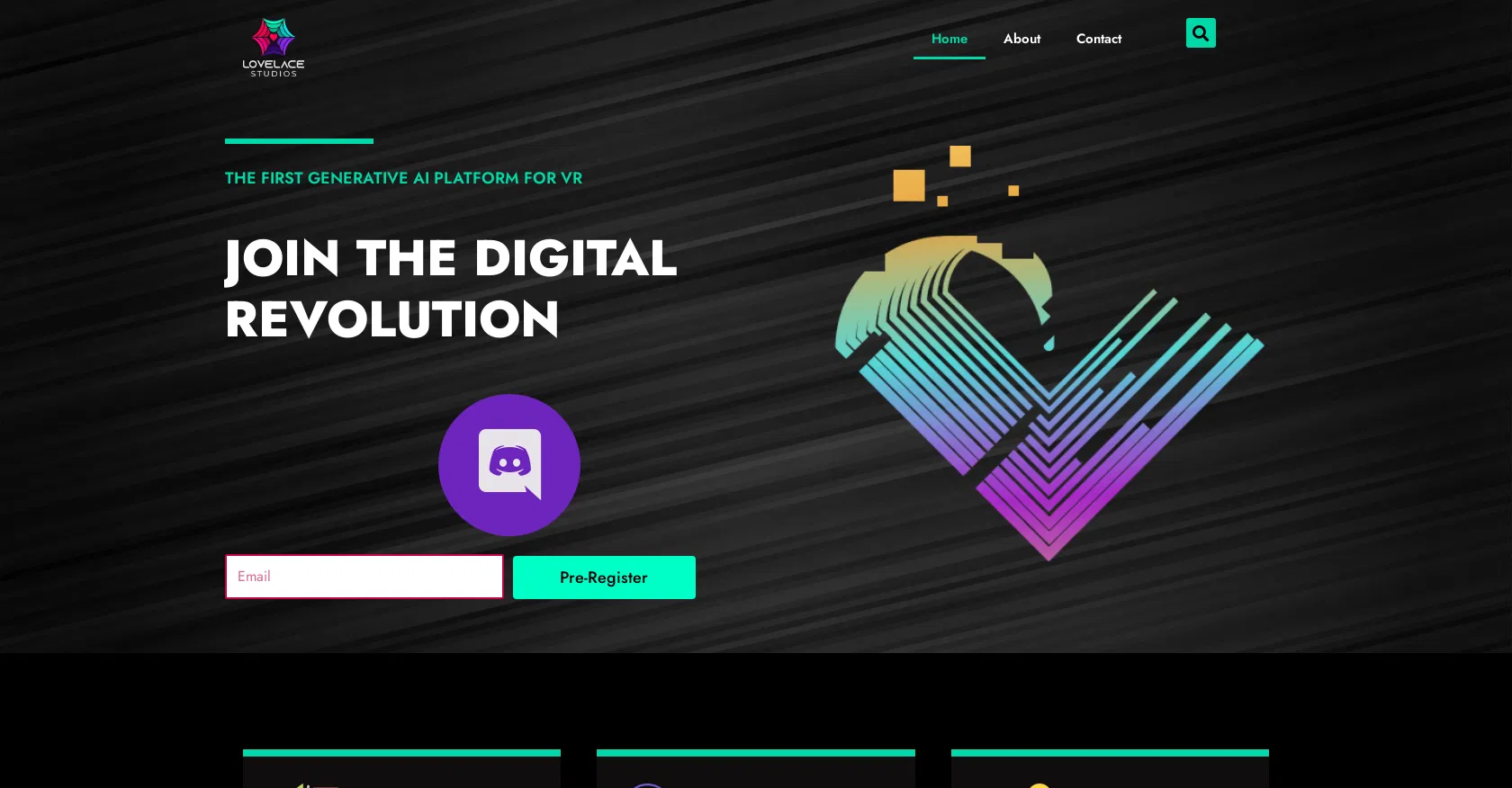
Lovelace Studio is a generative AI platform developed by Lovelace Studios specifically for crafting immersive virtual reality experiences. It empowers creators and explorers to generate unique, interactive worlds and engage with content produced by a community of users. The core value lies in its ability to democratize VR creation, making sophisticated world-building accessible without requiring extensive coding or 3D modeling expertise. This opens up new frontiers for storytelling, social interaction, and artistic expression within virtual spaces.
Key features include a robust creation portal for building custom worlds from scratch or using AI-assisted generation tools. Users can explore a vast library of player-generated environments, interact with dynamic objects and characters, and participate in shared social experiences. The platform supports real-time editing and iteration, allowing creators to modify their worlds on the fly. Additionally, it offers tools for scripting interactive events and integrating various media formats to enhance immersion and narrative depth within the VR landscape.
What sets Lovelace Studio apart is its dedicated focus on generative AI for VR, combining procedural content generation with user-friendly creative controls. Technically, it leverages machine learning models to assist in terrain generation, asset creation, and environmental storytelling. The platform is designed for standalone VR headsets and PC-based VR systems, ensuring broad accessibility. While it operates as a centralized platform, its emphasis on user-generated content fosters a collaborative ecosystem where creations can be shared, remixed, and experienced by others, distinguishing it from more static or developer-centric VR tools.
Ideal for indie game developers, VR enthusiasts, digital artists, and educators looking to create immersive learning simulations. Specific use cases include building interactive VR art galleries, designing narrative-driven adventure games, constructing virtual meeting spaces for remote teams, and developing educational environments for historical or scientific exploration. It also serves communities interested in social VR, providing a toolkit for hosting virtual events and crafting shared experiences that leverage the unique possibilities of generative AI within a three-dimensional, interactive medium.