MiroAI
Enhances creativity, collaboration, and productivity by generating ideas and streamlining work processes.
Are you the owner?
Claim this tool to publish updates, news and respond to users.
Sign in to claim ownership
Sign InDescription
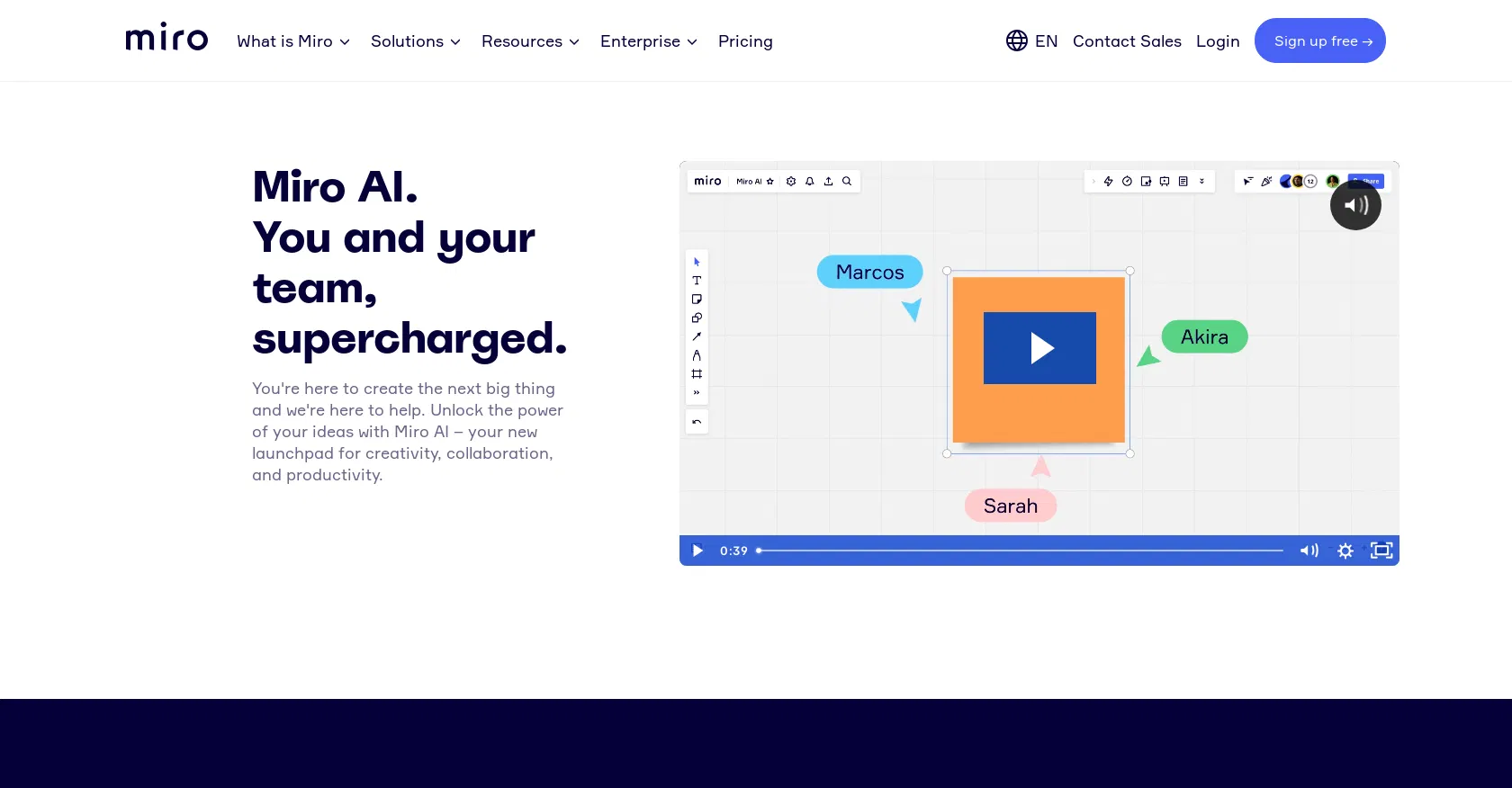
Miro AI is an integrated suite of artificial intelligence features within the Miro online collaborative whiteboard platform, developed by Miro. Its core value lies in augmenting human creativity and accelerating teamwork by automating routine tasks and providing intelligent suggestions directly within the visual workspace. It transforms the whiteboard from a passive canvas into an active brainstorming and execution partner, helping teams move from ideation to action more efficiently.
Key features include the ability to automatically generate and expand detailed mind maps from a central idea, summarize lengthy text from sticky notes or documents into concise insights, and create structured frameworks like user stories or project plans from simple prompts. It can also generate visual assets like icons and images from text descriptions to illustrate concepts, cluster and organize ideas on the board based on thematic similarity, and facilitate interactive workshops by suggesting activities or next steps based on the board's content.
What makes Miro AI unique is its deep, contextual integration into the collaborative whiteboard environment, where AI actions feel like a natural extension of the team's workflow rather than a separate tool. It operates on a freemium model, with AI features available on paid plans, and is accessible via web browser and dedicated desktop applications. It integrates seamlessly with a vast ecosystem of productivity and communication tools like Slack, Jira, Microsoft Teams, and Google Drive, allowing AI-generated content to flow directly into other workstreams. The technology is designed to be user-friendly, requiring no technical expertise to activate its capabilities through simple right-click menus or dedicated buttons.
Ideal for product managers, UX designers, agile coaches, and remote teams who rely on visual collaboration for brainstorming, strategy planning, and project management. Specific use cases include running AI-assisted design sprints, where the tool helps generate user personas and journey maps; facilitating retrospective meetings by automatically grouping feedback; accelerating research synthesis by summarizing interview notes; and creating engaging workshop templates for client presentations or internal training sessions.