Open-Audio TTS
Converts text into natural-sounding speech using OpenAI's technology for quick audio creation.
Are you the owner?
Claim this tool to publish updates, news and respond to users.
Sign in to claim ownership
Sign InDescription
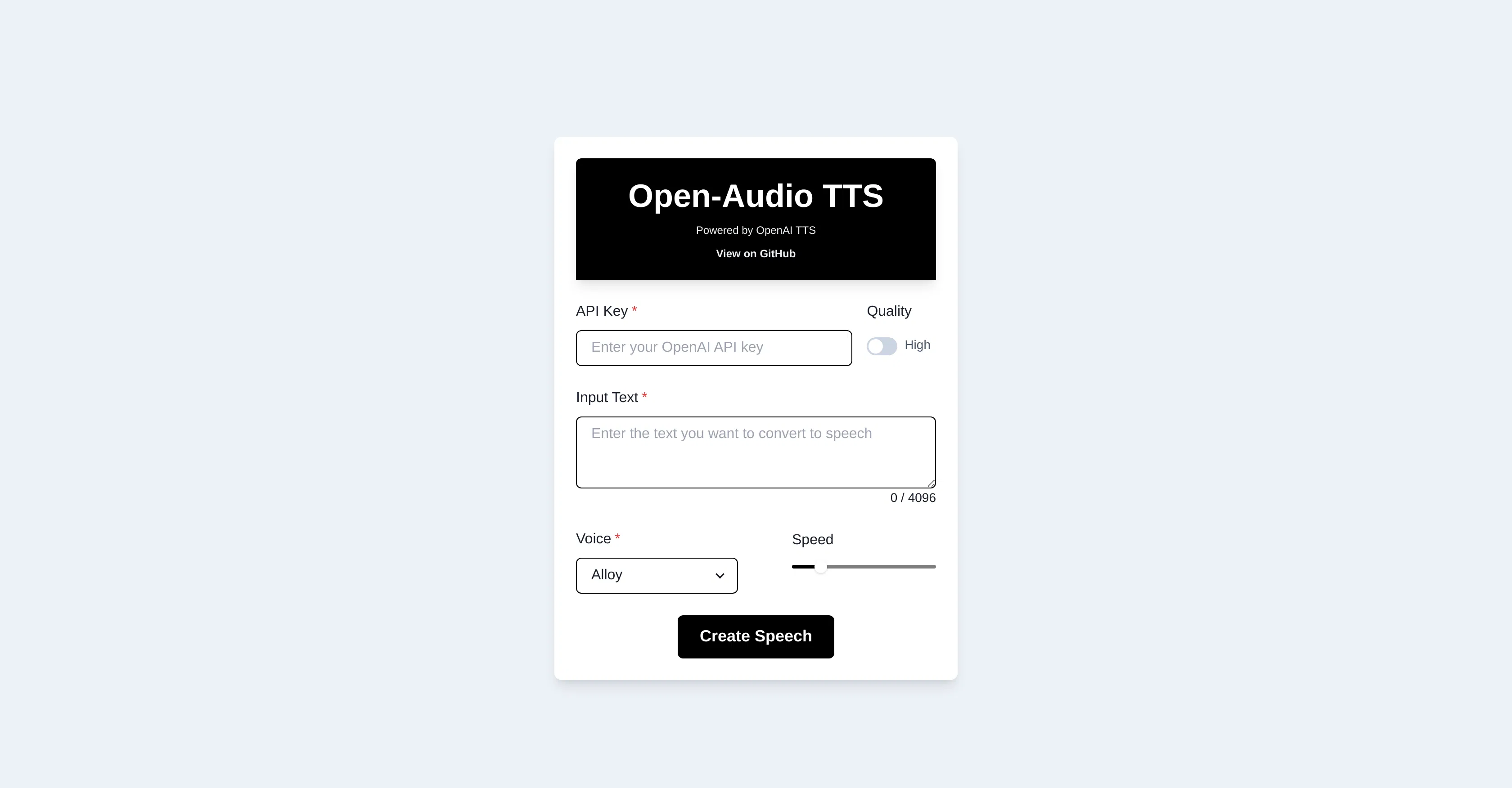
Open-Audio TTS is a text-to-speech tool developed by leveraging OpenAI's advanced technology, designed to transform written content into clear, verbal speech efficiently. Its primary value lies in providing a fast and effective solution for generating audio from text, making it accessible for various professional and personal applications where time and quality are essential.
Key features include the ability to process input text and output it as high-quality spoken audio, support for multiple languages and accents to cater to a global audience, options to adjust speech parameters like speed and tone for customization, and a user-friendly interface that simplifies the conversion process without requiring technical expertise. The tool also offers batch processing capabilities for handling larger volumes of text and integrates seamlessly with other platforms to enhance workflow productivity.
What makes Open-Audio TTS unique is its foundation on OpenAI's cutting-edge models, which ensure natural and human-like voice synthesis with minimal robotic artifacts. Technically, it operates as a web-based service, accessible from any browser, and may include API integrations for developers looking to embed TTS functionality into their own applications. The platform emphasizes low latency and high reliability, making it suitable for real-time use cases, and it often updates its voice libraries to reflect diverse linguistic needs and trends.
Ideal for content creators needing to produce podcasts or audiobooks, educators developing e-learning materials with audio components, businesses creating voiceovers for marketing videos or customer service bots, and individuals with visual impairments or those who prefer auditory learning. Specific use cases include generating narration for online courses, adding voice prompts to mobile apps, converting blog posts into audio articles for accessibility, and creating multilingual announcements for international audiences.