Outfindo
Guides customers through product selection with an AI-driven conversational interface instead of traditional filters.
Are you the owner?
Claim this tool to publish updates, news and respond to users.
Sign in to claim ownership
Sign InDescription
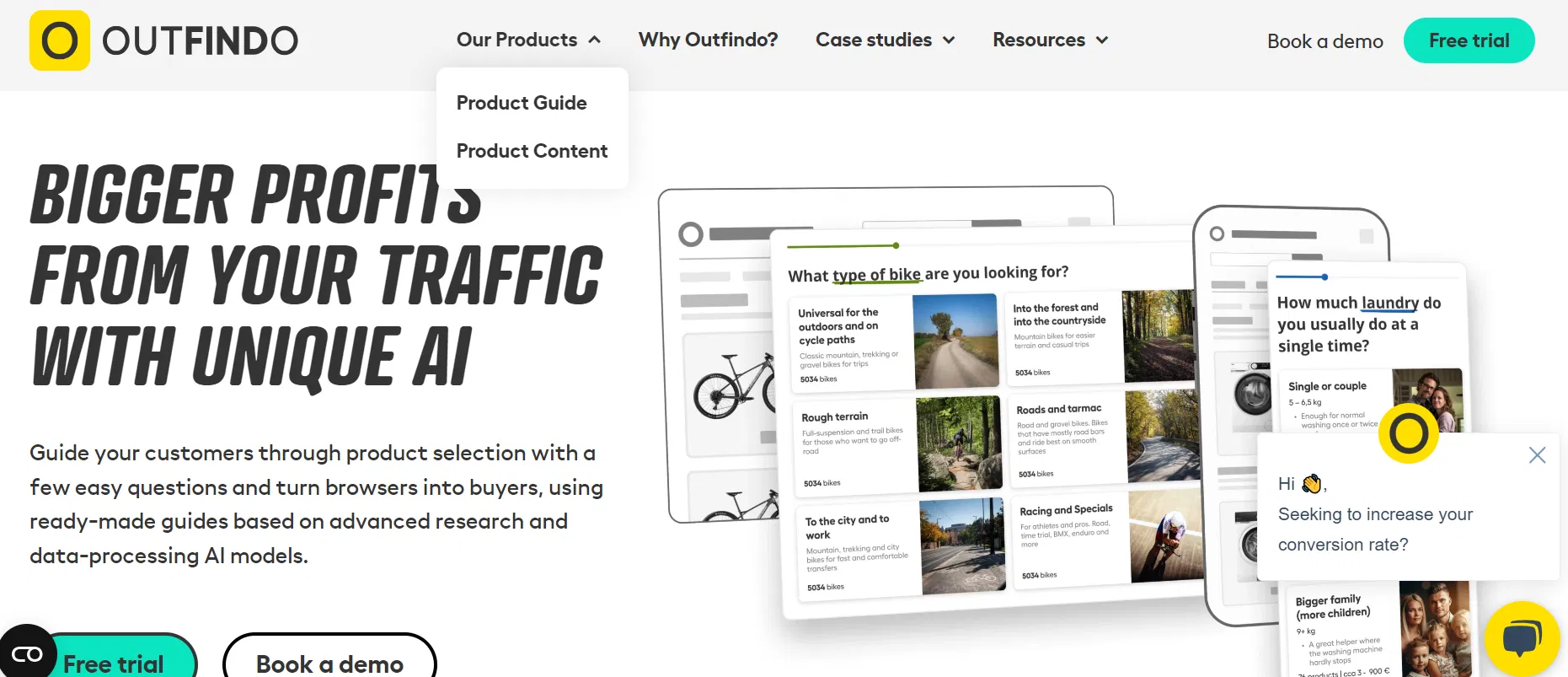
Outfindo is an AI-powered tool designed to revolutionize the online shopping experience by acting as a virtual shopping assistant. Developed to address the limitations of conventional filter-based navigation, it engages customers in a guided, conversation-like process to understand their specific needs and preferences. Its core value lies in significantly reducing decision fatigue and cart abandonment by providing personalized, relevant product recommendations, thereby enhancing customer satisfaction and increasing conversion rates for e-commerce businesses.
Key features include an intelligent questionnaire that adapts based on user responses to pinpoint exact requirements, real-time product matching against a detailed attribute database, and the generation of comparative insights to explain why certain items are recommended. The system also provides merchants with analytics on customer decision-making patterns, integrates seamlessly into existing product pages, and supports a visual, interactive interface that makes the selection process engaging rather than overwhelming.
What sets Outfindo apart is its foundational technology, which relies on a deep product ontology rather than simple tags or categories. This allows the AI to understand complex, subjective criteria and trade-offs, such as balancing budget against specific features. It operates as a SaaS platform, typically integrated via JavaScript into an online store, and works alongside existing e-commerce systems without requiring a complete platform overhaul. Its uniqueness stems from replacing passive filtering with an active, diagnostic dialogue that mimics an in-store expert consultation.
Ideal for mid to large-sized e-commerce retailers in complex product categories like furniture, electronics, or home appliances, where customers often feel overwhelmed by choice. Specific use cases include furniture stores helping customers find the perfect sofa based on room size, style, and comfort preferences, or electronics retailers guiding users to the right laptop by understanding their usage for work, gaming, or travel. It is also valuable for brands aiming to reduce return rates by ensuring customers make informed, confident purchases from the start.
Similar Tools