
PaperClip
Helps AI researchers track and review papers in machine learning, computer vision, and NLP.
Are you the owner?
Claim this tool to publish updates, news and respond to users.
Sign in to claim ownership
Sign InDescription
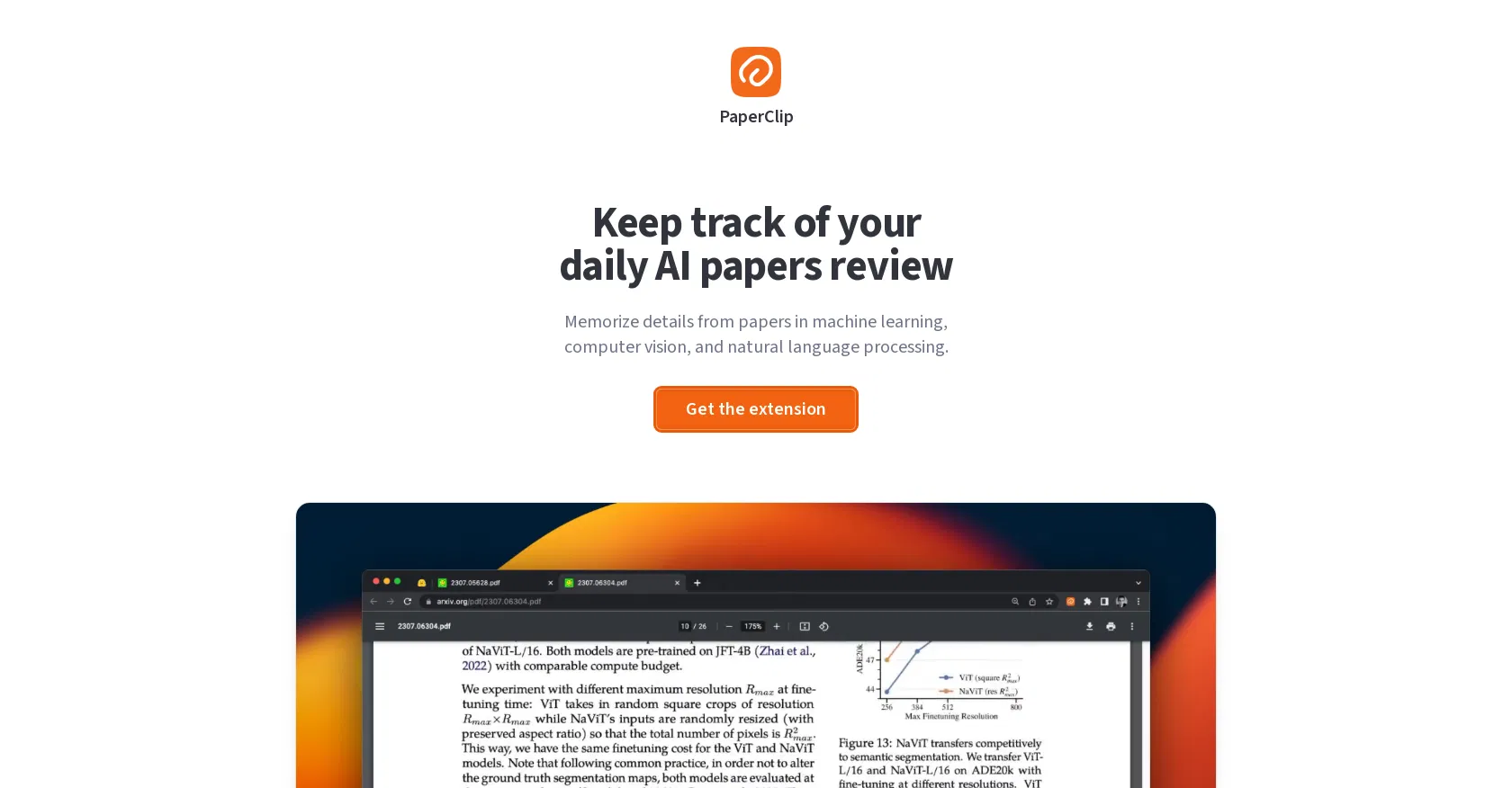
PaperClip is a specialized digital assistant created to support AI researchers in the demanding task of reviewing academic literature. It functions as a 'second brain,' enabling users to efficiently capture, organize, and recall critical details, findings, and citations from the vast number of papers published in fields like machine learning, computer vision, and natural language processing. Its core value lies in transforming the chaotic process of literature review into a structured, searchable, and manageable knowledge base, thereby accelerating research cycles and improving the quality of academic work.
Key features include the ability to automatically extract and summarize key points from uploaded PDFs, create a personal library of annotated papers with custom tags, and generate quick citations for reference. The tool also supports semantic search across your entire paper collection, allowing you to find connections and relevant work based on concepts rather than just keywords. Furthermore, it can track the lineage of ideas by linking papers that cite each other, and it offers offline access to your curated library for uninterrupted work.
What makes PaperClip unique is its laser focus on the specific workflow of AI/ML researchers, understanding the structure of academic papers in these domains to parse information more intelligently than generic note-taking apps. It is a web-based application designed for seamless daily use, with a clean interface that prioritizes functionality over distraction. While it operates as a standalone platform, its utility is amplified when integrated into a researcher's existing ecosystem of reference managers and writing tools, acting as a dedicated analysis layer rather than a replacement.
Ideal for PhD students, academic scientists, and industry researchers in artificial intelligence who need to stay abreast of the latest publications and build a deep, accessible understanding of their field. Specific use cases include preparing for literature reviews for new projects, finding foundational papers for a thesis, quickly recalling methodologies or results during experiment design, and efficiently managing the flood of new preprints from conferences like NeurIPS, ICML, and CVPR.