
Prompt Octopus
Compares multiple AI prompt responses side-by-side for efficient prompt engineering.
Are you the owner?
Claim this tool to publish updates, news and respond to users.
Sign in to claim ownership
Sign InDescription
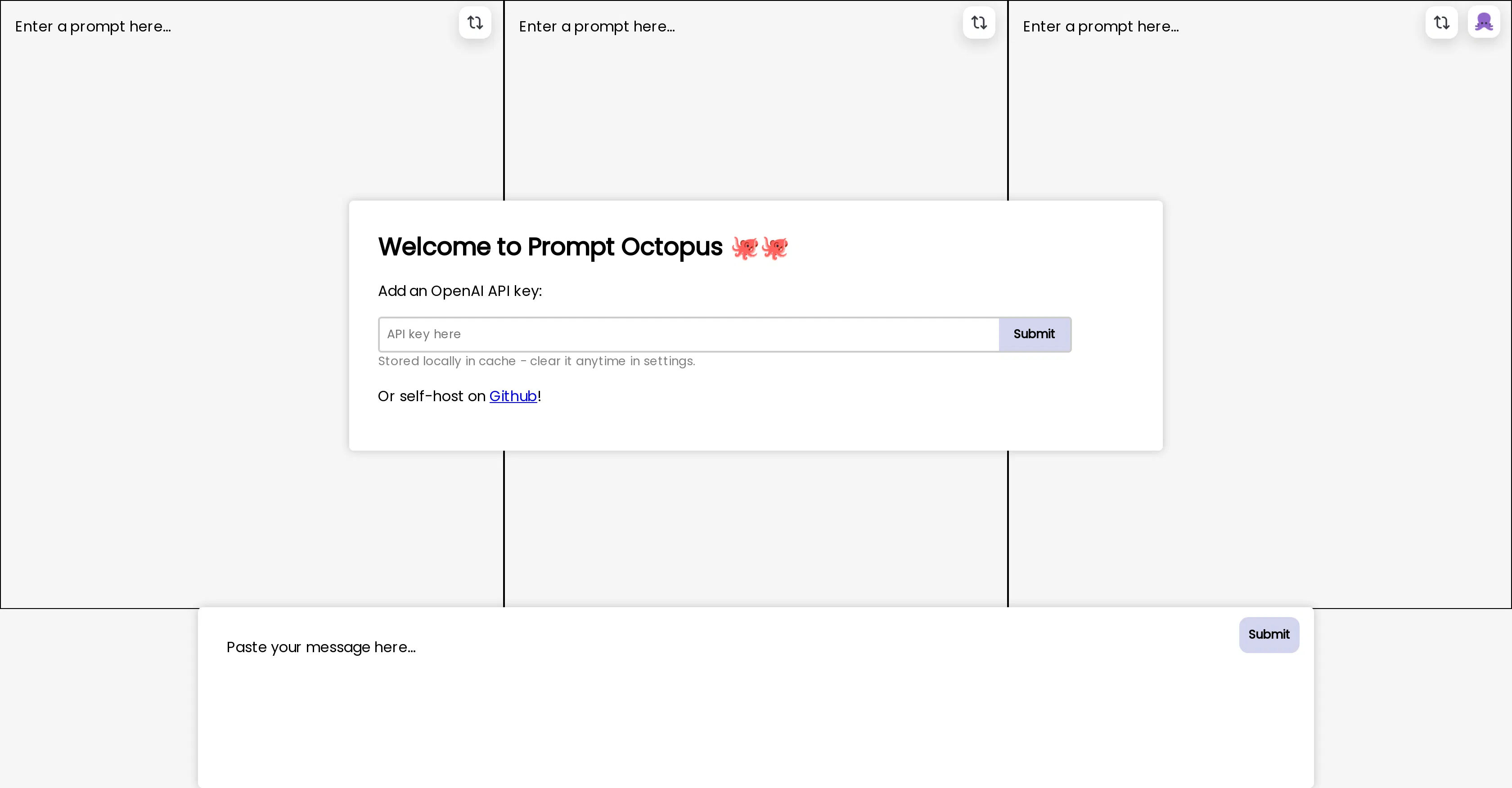
Prompt Octopus is an AI-powered prompt engineering and comparison tool that allows users to test and refine their instructions for large language models. Its core value lies in enabling a systematic, visual approach to prompt development, helping users quickly identify the most effective phrasing and parameters to achieve desired outputs from AI models. By providing a direct interface for experimentation, it significantly reduces the guesswork and iterative time typically involved in crafting high-quality prompts.
Key features include the ability to run and compare multiple prompts against the same AI model simultaneously in a single view. Users can easily adjust parameters like temperature and token count for each prompt variant. The tool maintains a history of past experiments for reference and allows for the organization of prompts into projects. It also supports the creation of template prompts with variable slots, enabling batch testing of different inputs against a consistent instruction structure.
What makes Prompt Octopus unique is its dedicated focus on the comparative workflow, a niche often overlooked in broader AI platforms. Technically, it operates as a web application that integrates directly with the OpenAI API, requiring users to provide their own API key for operation. A critical technical detail is that all API keys and prompt data are stored locally in the user's browser, ensuring privacy and security by never transmitting this sensitive information to external servers. This local-first approach distinguishes it from many cloud-based SaaS tools.
Ideal for AI researchers, developers building LLM-powered applications, content creators relying on generative AI, and educators teaching prompt engineering concepts. Specific use cases include A/B testing different prompt formulations for a chatbot, optimizing instructions for consistent text generation in marketing copy, systematically exploring how parameter changes affect creative writing outputs, and developing reliable prompt templates for automated workflows that require stable, predictable AI responses.