Prototext
Organizes notes and projects with AI, creating flexible presentations and knowledge networks.
Are you the owner?
Claim this tool to publish updates, news and respond to users.
Sign in to claim ownership
Sign InDescription
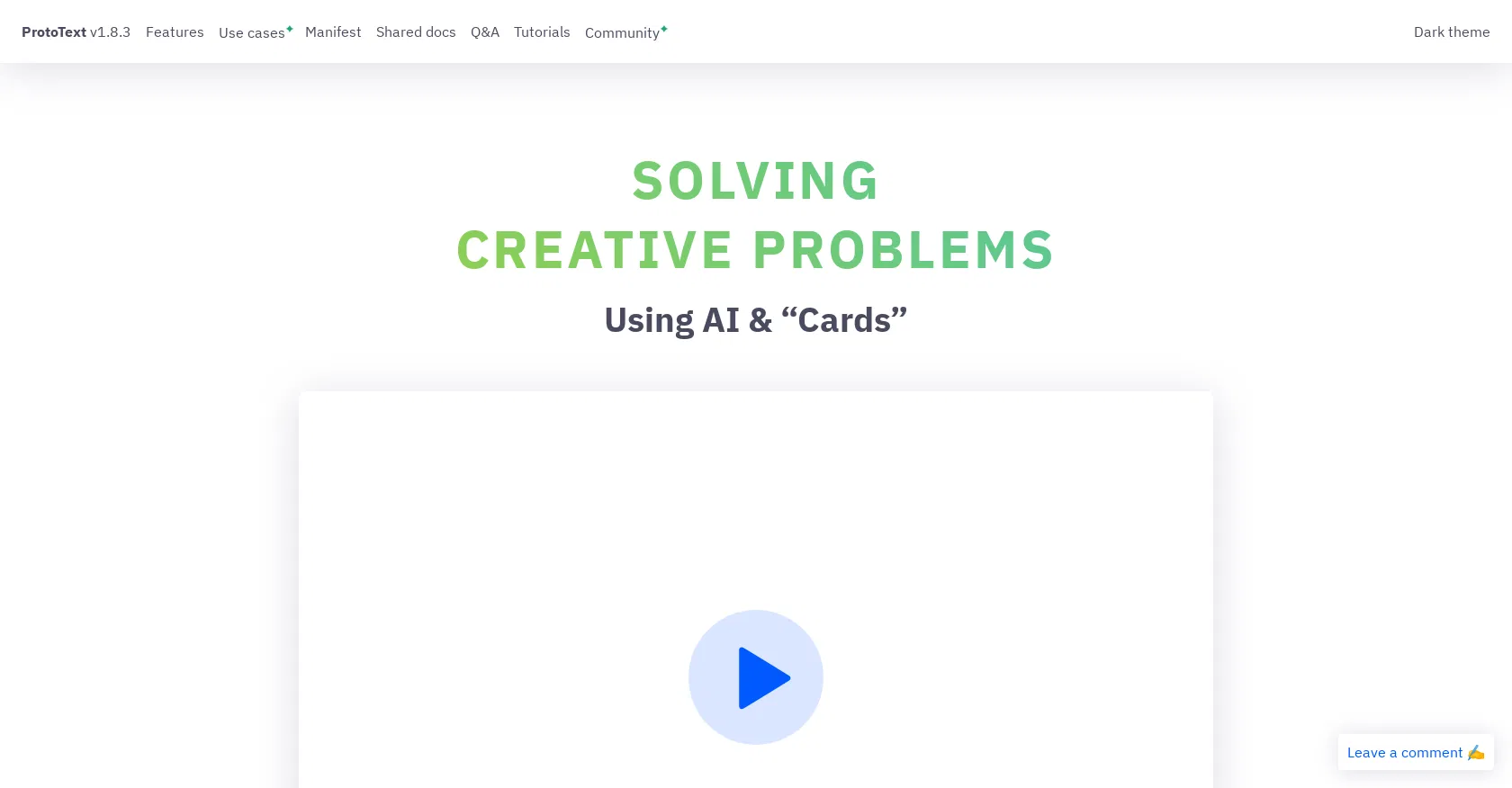
ProtoText is a desktop text processing application designed to boost productivity by combining AI capabilities with a minimalist interface for structuring information. Its core value lies in transforming chaotic notes and ideas into organized, visually connected structures, facilitating the transition from brainstorming to finished projects. The app positions itself as a universal content management tool where text becomes a flexible and interactive building block.
Key features: the application allows users to maintain multilingual notes and compose texts using a built-in AI assistant that helps with idea generation and phrasing. A key function is creating dynamic presentations directly from structured text blocks without needing to switch between programs. Users can build non-linear knowledge networks by linking various notes and ideas with visual connections, resembling mind maps. Additionally, the tool offers flexible project management, enabling content organization by tasks, tags, and statuses, as well as exporting results to various formats.
A distinctive feature of ProtoText is its focus on text as the central element around which all other functions are built—from presentations to knowledge networks. It is a local desktop application, ensuring data privacy and offline operation, although AI functions likely require online access. The interface is designed in a minimalist, intuitive style that helps users focus on content. Currently, the tool is available for major desktop platforms (Windows, macOS, Linux) but lacks extensive public integrations with third-party services, remaining a self-contained solution.
Ideal for researchers, writers, students, and project managers who need to systematize large volumes of textual information and visualize connections between concepts. Use cases include preparing scientific papers and theses where linking sources and ideas is necessary; planning and documenting stages of creative or business projects; conducting brainstorming sessions and structuring their outcomes; and creating interactive presentations for educational purposes or work meetings where non-linear material delivery is important.