
Recipe Lens
Extracts recipes and cooking instructions from food photos using AI image recognition.
Are you the owner?
Claim this tool to publish updates, news and respond to users.
Sign in to claim ownership
Sign InDescription
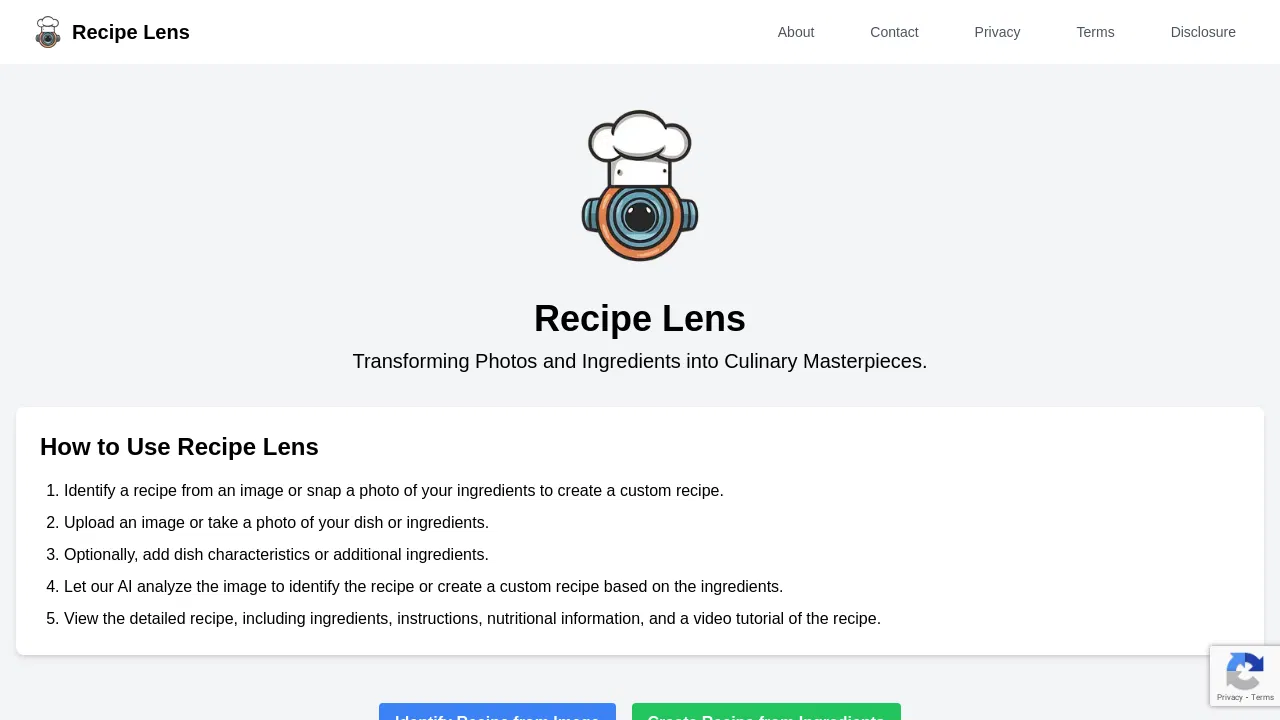
Recipe Lens is an AI-powered web application that instantly identifies dishes in user-uploaded photos and provides their corresponding recipes. Developed to bridge the gap between visual inspiration and practical cooking, its core value lies in transforming any food image from social media, menus, or personal galleries into a actionable cooking guide, saving users from extensive manual searches. It serves as a digital culinary detective, making discovered dishes instantly reproducible in the home kitchen.
Key features: The tool analyzes uploaded food images to detect specific dishes, ingredients, and cooking styles. It then retrieves or generates a detailed recipe, including a list of required ingredients with precise measurements and step-by-step cooking instructions. Users can adjust serving sizes, which automatically recalculates ingredient quantities, and save favorite recipes to personal collections within the platform. The system also suggests similar recipes or variations based on the identified dish, offering culinary inspiration and alternatives.
What sets Recipe Lens apart is its specialized computer vision model, trained exclusively on a vast and diverse dataset of global cuisine, which allows for high accuracy in recognizing complex, multi-component dishes where generic image recognition fails. It operates purely as a web app, requiring no software installation, and is optimized for use on both mobile and desktop browsers. While it does not offer direct API integrations for developers, its simplicity and focused functionality make it a standout tool in the niche of food tech, prioritizing immediate utility over broad feature sets.
Ideal for home cooks who frequently encounter appealing dishes online or in restaurants and wish to recreate them, food bloggers seeking to reverse-engineer recipes for inspiration, and individuals managing dietary preferences who need to quickly ascertain if a visually presented meal aligns with their restrictions. It is particularly useful for decoding meals from travel photos or a restaurant's social media page where a written recipe is not provided, effectively turning visual food exploration into a practical kitchen activity.