
Ren AI | Leadership & Accountability Platform
Empowers managers to build a high-feedback culture with clear standards and AI-driven accountability.
Are you the owner?
Claim this tool to publish updates, news and respond to users.
Sign in to claim ownership
Sign InDescription
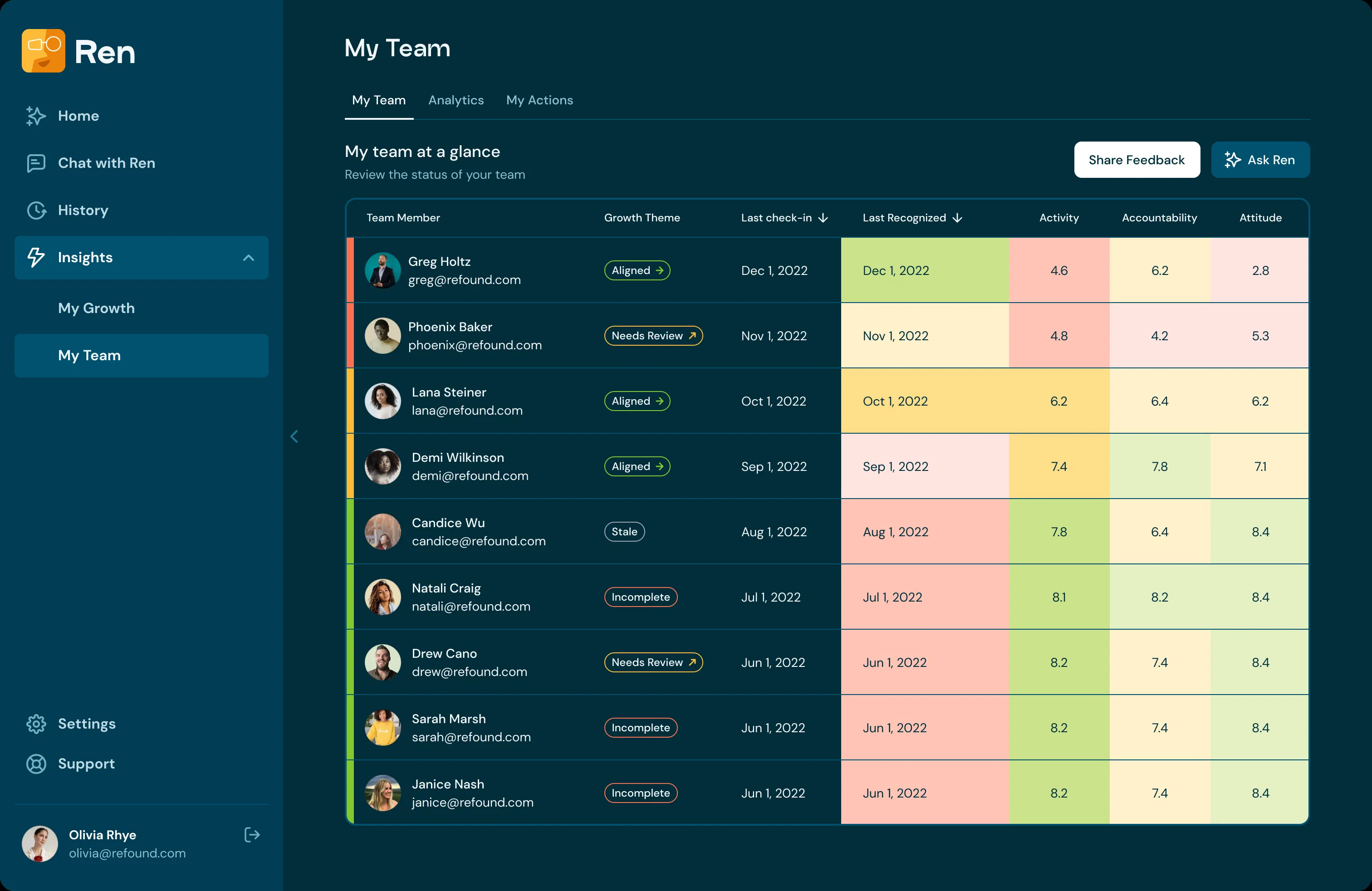
Ren AI is a leadership and accountability platform created to address the critical feedback deficit in modern, often fragmented workplaces. Its core value proposition is that building a culture of effective feedback does not require deep personal relationships but rather clear, objective standards and systematic accountability. The platform leverages artificial intelligence to guide and track these processes, making continuous improvement a structured and data-driven part of organizational life.
Key features: The platform enables managers to set and communicate clear behavioral standards for their teams. It facilitates regular, structured feedback cycles that are focused on observable actions rather than personal traits. Ren provides AI-powered nudges and reminders to ensure accountability and follow-through on commitments. It generates actionable insights and progress reports from feedback data, helping leaders identify patterns and coaching opportunities. The system also includes tools for recognizing positive behaviors that align with set standards, reinforcing a culture of growth.
What makes Ren unique is its foundational premise that shifts the focus from relationship-dependent feedback to standard-based accountability, a scalable approach for distributed or hybrid teams. Technically, it operates as a web-based SaaS platform, designed for seamless integration into daily workflows without significant disruption. While specific third-party integrations are not detailed, its design philosophy suggests compatibility with common workplace communication and HR systems, aiming to centralize leadership development activities in one actionable hub.
Ideal for mid-level to senior managers, team leads, and HR professionals in organizations struggling with inconsistent feedback, low accountability, or remote team dynamics. Specific use cases include onboarding new managers into a structured leadership framework, revitalizing performance review processes with continuous data, aligning dispersed teams around unified behavioral expectations, and developing a pipeline of leaders by making coaching a measurable, habitual practice rather than an occasional event.