
SpeechReader
Converts written text into natural-sounding audio using advanced speech synthesis algorithms.
Are you the owner?
Claim this tool to publish updates, news and respond to users.
Sign in to claim ownership
Sign InDescription
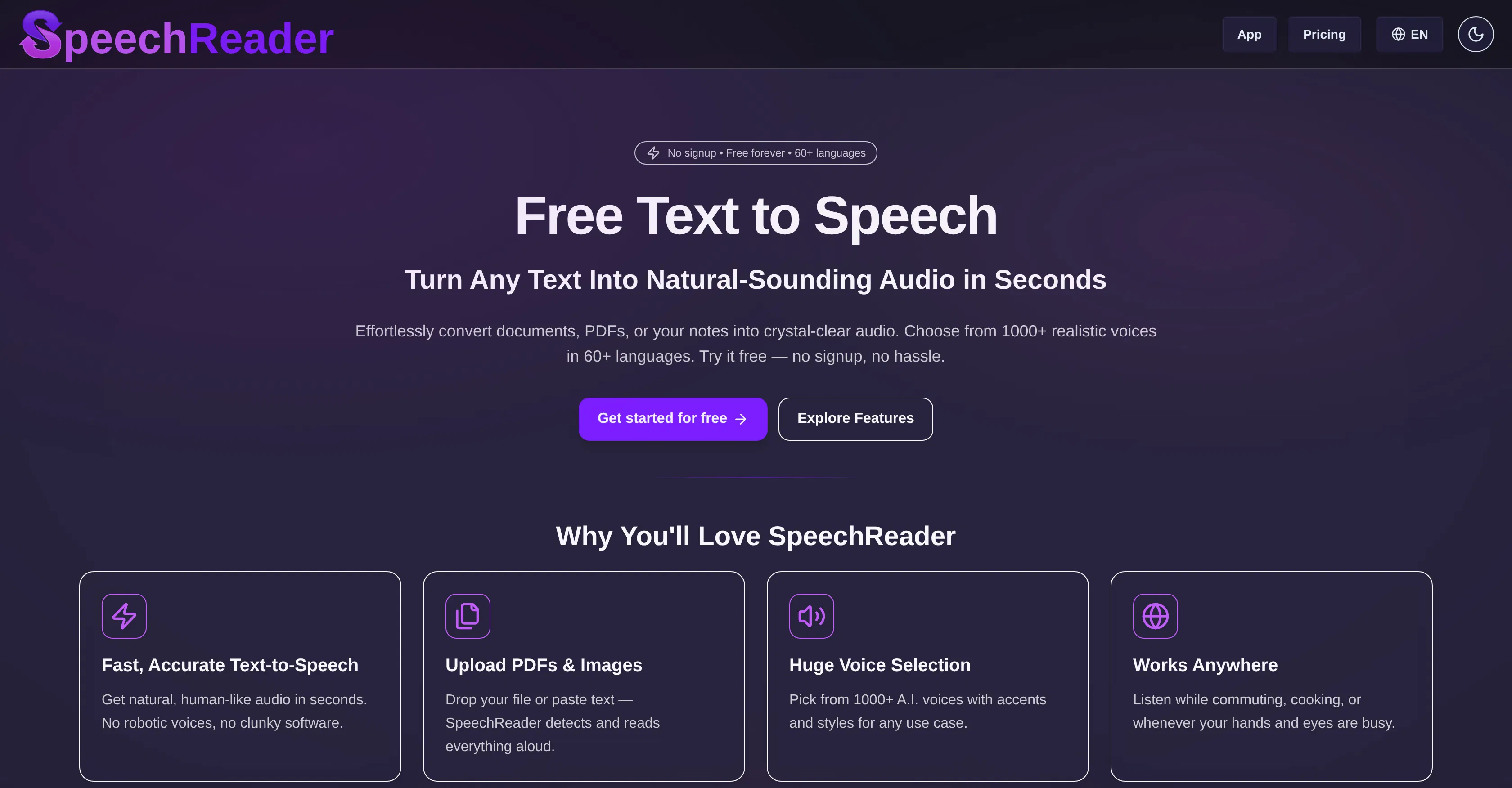
SpeechReader is a web-based text-to-speech tool developed to provide instant, high-quality audio conversion from text. It leverages advanced speech synthesis algorithms to deliver natural-sounding speech, offering significant value by making written content accessible and consumable in audio format without requiring complex software or technical expertise. The platform is designed for simplicity and speed, allowing users to generate speech almost instantaneously from any device with a web browser.
Key features include the ability to convert text by pasting it directly into the web interface or by uploading various file formats for processing. The tool supports multiple languages and voices, enabling users to select the most suitable tone and accent for their content. It allows for the adjustment of speech parameters such as speed and pitch to fine-tune the audio output. Additionally, users can download the generated audio files in common formats for offline use or further integration into other projects.
What sets SpeechReader apart is its focus on emulating human-like tone, rhythm, and intonation to produce audio that sounds less robotic and more engaging. The underlying technology utilizes state-of-the-art neural networks for speech synthesis, ensuring high fidelity and clarity. Being entirely web-based, it requires no installation and is accessible across all major platforms, including Windows, macOS, iOS, and Android, without any specific integrations needed—just a modern web browser. This cloud-based approach also means updates and improvements are seamlessly delivered to all users.
Ideal for content creators, educators, and professionals who need to produce audio versions of articles, documents, or e-learning materials efficiently. It is particularly useful for individuals with visual impairments or reading difficulties, as it provides an alternative way to consume text-based information. Marketers can use it to create voiceovers for presentations or social media content, while students and researchers can benefit from listening to lengthy papers or books. Businesses can also employ it for generating automated customer service messages or internal training audio, enhancing accessibility and productivity across various workflows.