Symphony
Combines predictive and generative AI to analyze past events and assist in strategic future planning for businesses.
Are you the owner?
Claim this tool to publish updates, news and respond to users.
Sign in to claim ownership
Sign InDescription
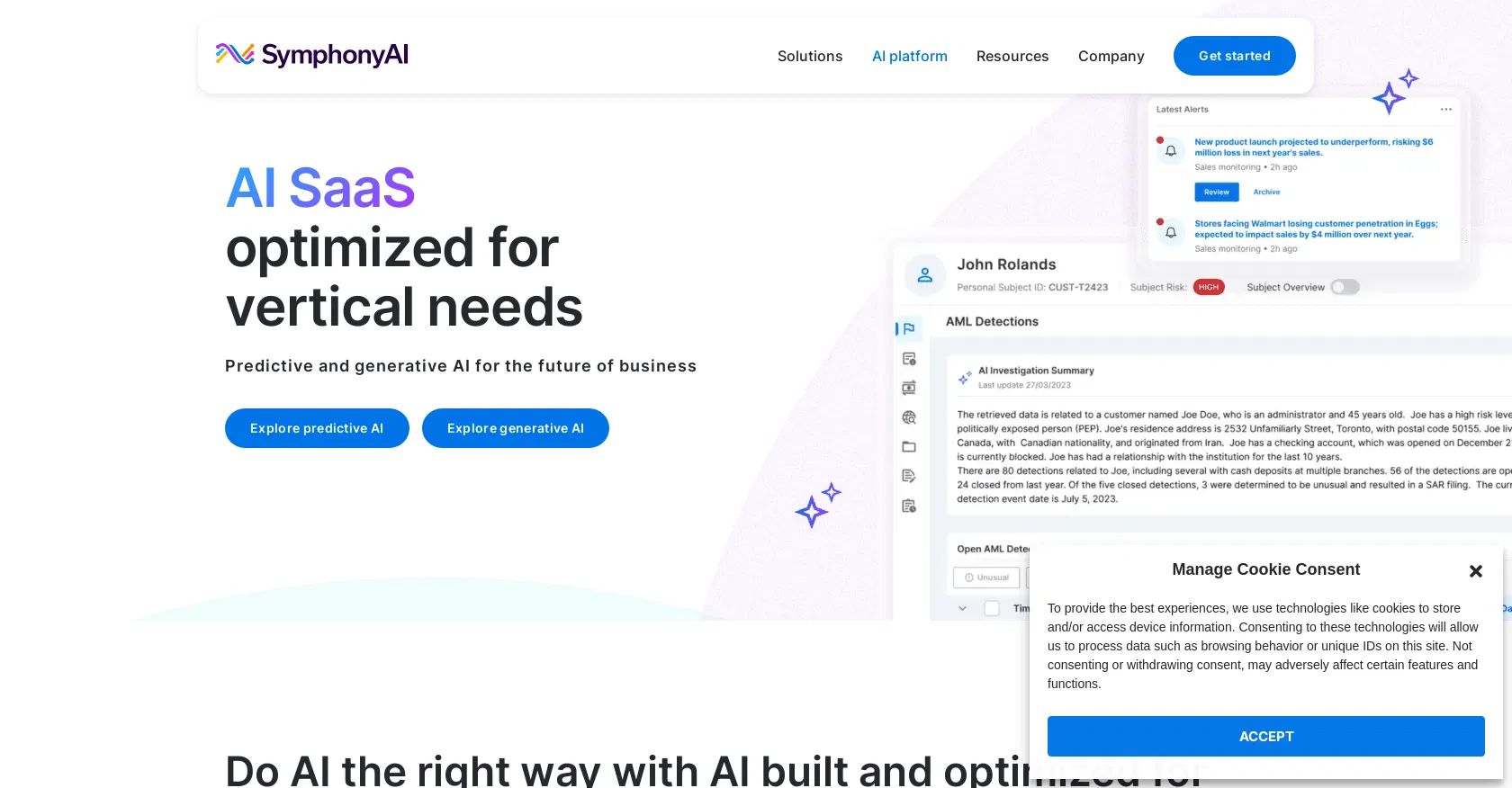
SymphonyAI is an enterprise-grade AI platform developed by SymphonyAI that delivers significant value by merging predictive analytics with generative AI capabilities. This integration allows organizations to not only understand historical data patterns but also to simulate and plan for future scenarios, thereby transforming raw data into actionable strategic intelligence. The platform is designed to empower decision-makers with a comprehensive view of their operations and market dynamics.
Key features include the ability to process and analyze vast datasets to identify trends and anomalies, generate predictive models for forecasting business outcomes, create natural language reports and insights from complex data, and provide prescriptive recommendations for optimizing processes. It also facilitates collaborative planning by allowing teams to interact with AI-generated scenarios and adjust variables to see potential impacts, making the planning process more dynamic and data-driven.
What sets SymphonyAI apart is its industrial focus and the depth of its vertical-specific solutions, which are built on a foundation of deep learning and other advanced AI technologies. The platform is accessible via web and integrates with existing enterprise systems such as ERP and CRM software, ensuring it works within established IT ecosystems. It utilizes technologies like cookies for session management and data processing to personalize the user experience and maintain application state, which is a standard practice for such web-based services.
Ideal for large enterprises and mid-market companies across sectors like retail, manufacturing, and finance, SymphonyAI is particularly valuable for business analysts, strategic planners, and operations managers. Specific use cases include demand forecasting to optimize inventory, risk assessment for financial portfolios, customer behavior analysis for targeted marketing, and operational efficiency simulations to reduce costs and improve throughput.