
TTSynth
Converts written text into high-quality, natural-sounding audio files for download.
Are you the owner?
Claim this tool to publish updates, news and respond to users.
Sign in to claim ownership
Sign InDescription
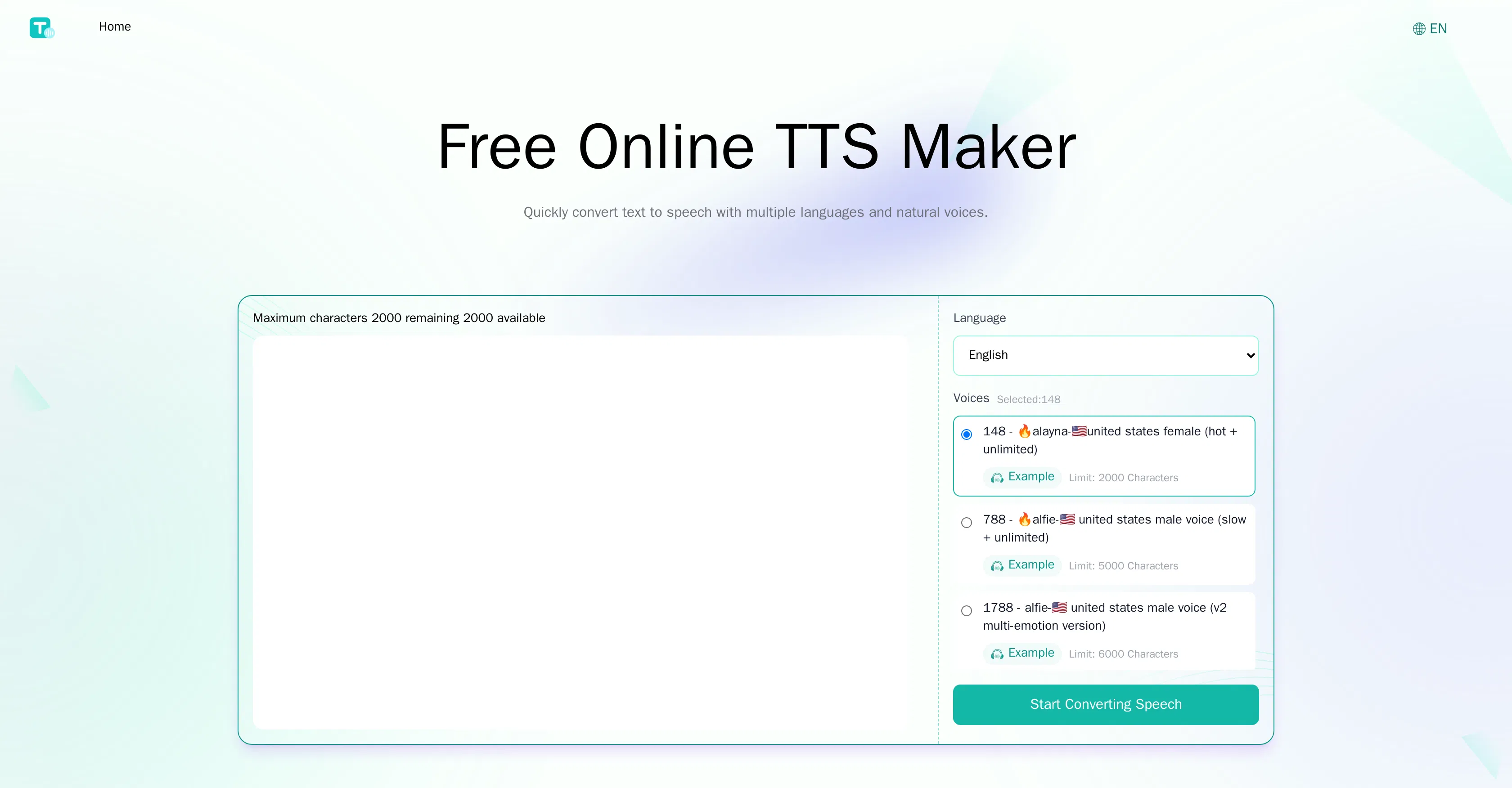
TTSynth.com is an online Text-to-Speech (TTS) tool that transforms written text into lifelike audio files, providing a straightforward solution for generating downloadable MP3s. The platform offers a comprehensive suite of features centered around a wide selection of natural-sounding voices, enabling users to create audio content from text without requiring any specialized software or recording equipment. Its primary value lies in making professional-grade voice synthesis accessible for a variety of personal and professional applications, directly from a web browser.
Key features include the ability to generate high-quality TTS MP3 files that are immediately available for download, supporting a diverse range of languages and accents to cater to a global audience. Users can adjust speech parameters such as speed, pitch, and emphasis to fine-tune the output, and the tool supports the processing of lengthy text documents or scripts in a single operation. The interface is designed for simplicity, allowing for quick text input and voice selection, and it includes a preview function to audit the audio before finalizing the download.
What makes TTSynth unique is its focus on delivering high-fidelity, natural-sounding voice synthesis through an intuitive web-based platform that requires no installation. The underlying technology leverages advanced neural TTS models to produce speech that closely mimics human intonation and rhythm, distinguishing it from more robotic-sounding legacy systems. It operates entirely online, making it platform-agnostic and accessible from any device with a modern web browser, though it does not currently advertise deep integrations with other productivity or content creation suites, positioning itself as a dedicated, standalone tool.
Ideal for content creators, educators, and businesses needing to produce voiceovers for videos, podcasts, or e-learning modules efficiently. It is equally useful for individuals who require audio versions of written documents for accessibility purposes, such as creating materials for the visually impaired, or for developers prototyping voice interfaces. Marketers can utilize it to generate promotional audio clips, while authors and bloggers might use it to offer audio versions of their articles, expanding their content's reach and engagement.