TalkToText
Converts speech into clear, refined written text across various communication and collaboration platforms.
Are you the owner?
Claim this tool to publish updates, news and respond to users.
Sign in to claim ownership
Sign InDescription
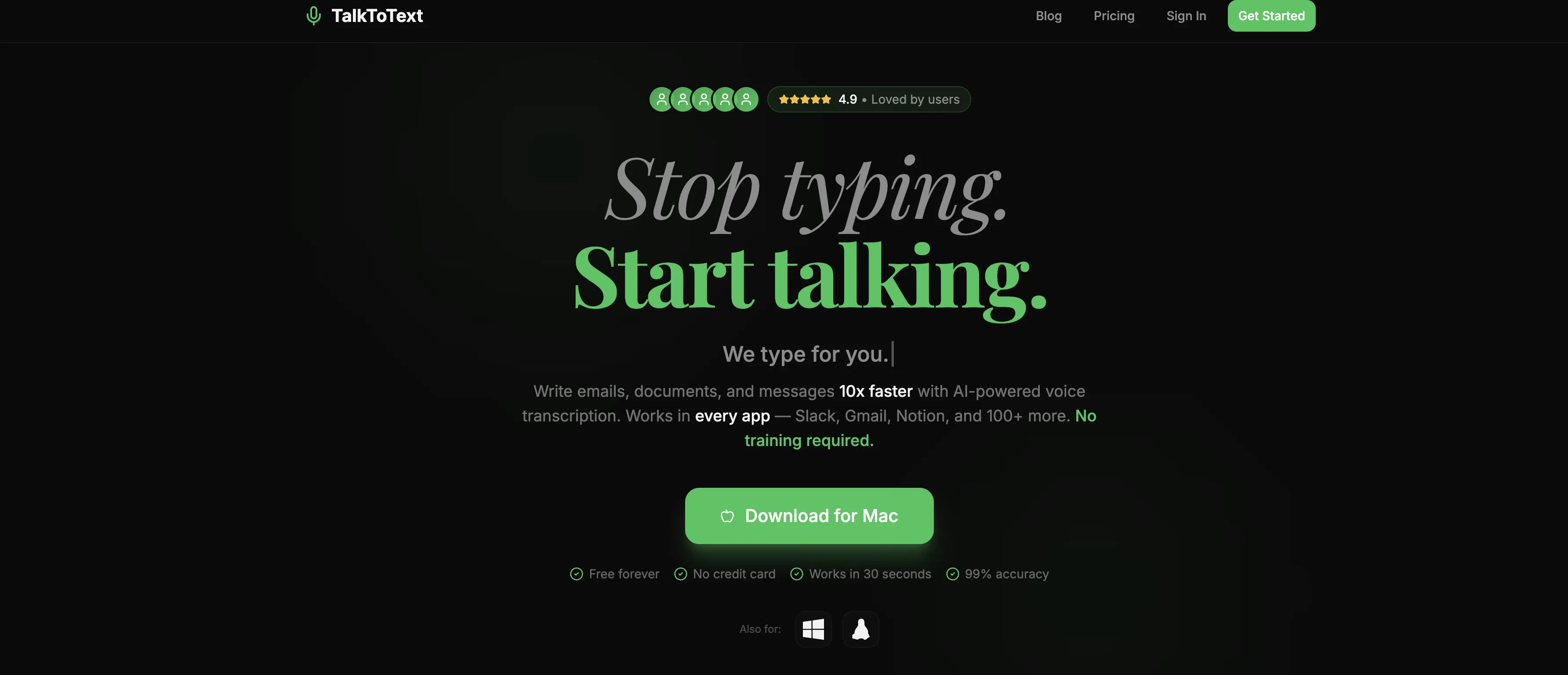
TalkToText is an advanced voice-to-text AI tool engineered to transform spoken language into exceptionally clear and refined written transcripts. Developed as a cutting-edge application, its primary value lies in delivering high-accuracy transcription that captures nuances and context, thereby saving users significant time and effort in documentation and content creation. It serves as a reliable digital scribe for professionals across numerous fields who need to convert meetings, interviews, lectures, or personal notes into actionable text.
Key features include real-time transcription with minimal latency, support for multiple languages and accents to ensure global usability, advanced punctuation and formatting for producing ready-to-use documents, and robust editing capabilities that allow users to correct and refine the AI-generated text seamlessly. The tool also offers speaker diarization to distinguish between different voices in a conversation and can filter out background noise to enhance clarity, making it effective even in less-than-ideal acoustic environments.
What sets TalkToText apart is its deep integration and seamless functionality within a wide ecosystem of platforms, including popular communication tools like Slack and Microsoft Teams, collaboration suites such as Google Workspace, and standalone recording applications. It leverages state-of-the-art natural language processing models that are continuously trained on diverse datasets, enabling it to understand industry-specific jargon and conversational speech patterns. The architecture is designed for scalability and security, ensuring data privacy with enterprise-grade encryption, and it operates via both web interfaces and dedicated mobile applications for on-the-go transcription needs.
Ideal for journalists conducting interviews, students recording lectures, business professionals documenting meetings and action items, content creators generating scripts from voice memos, and researchers transcribing qualitative data. Specific use cases include creating searchable archives of team discussions, generating subtitles for video content, drafting articles or reports from dictated outlines, and assisting individuals with disabilities in converting speech to text for communication and work purposes, thereby enhancing productivity and accessibility across the board.