
ThinkInPublic
Transforms ChatGPT conversations, rough notes, and ideas into clean, structured blog posts for fast publishing.
Are you the owner?
Claim this tool to publish updates, news and respond to users.
Sign in to claim ownership
Sign InDescription
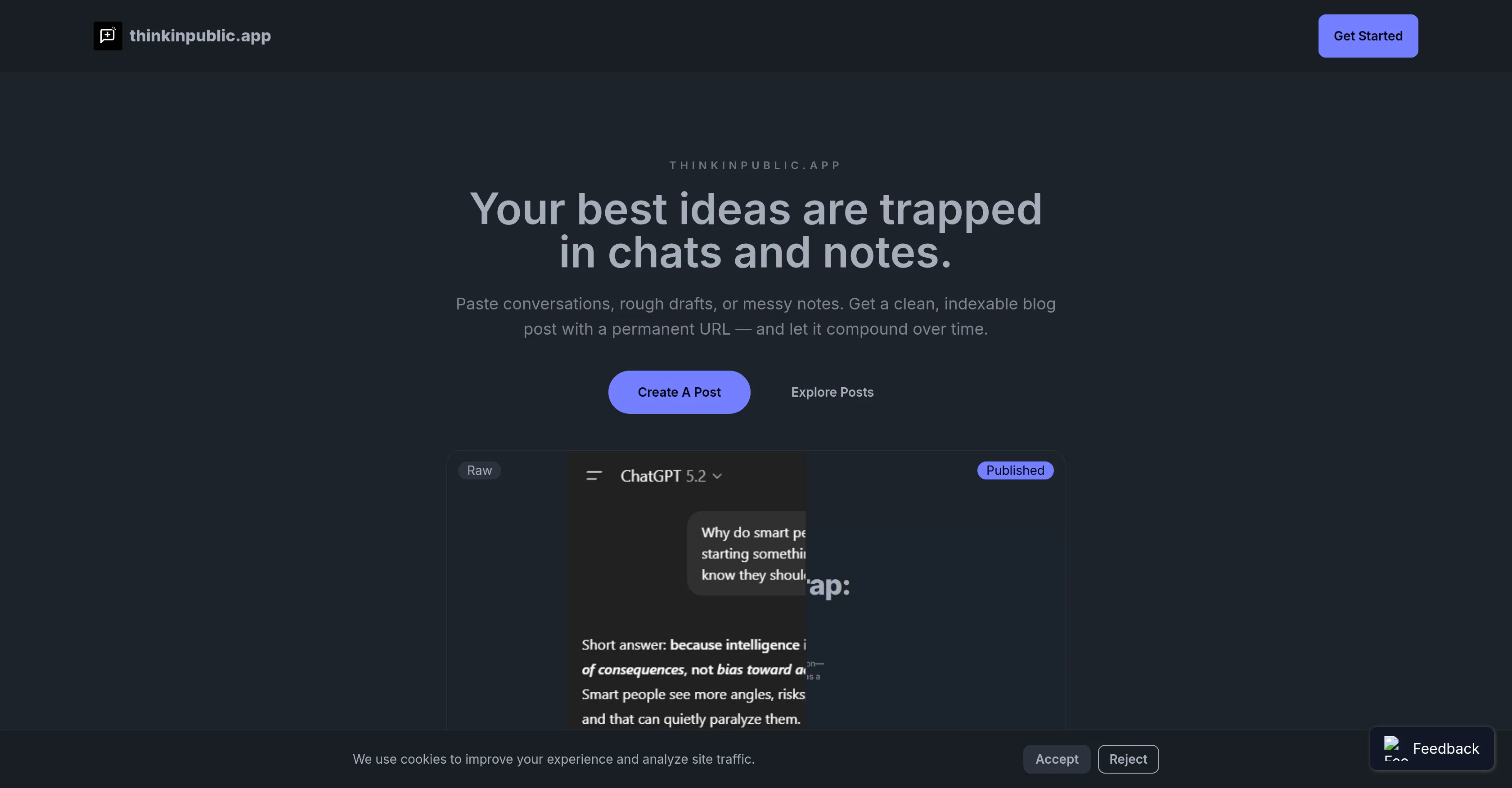
ThinkInPublic is an online tool created to help writers and content creators quickly turn raw, unstructured text into polished blog posts. Its core value lies in streamlining the content creation workflow, taking inputs like messy notes, half-formed ideas, or lengthy AI chat transcripts and converting them into coherent, reader-friendly articles ready for publication. The tool is designed to eliminate the friction between ideation and publishing, making it easier to share thoughts online.
Key features include the ability to import and process text directly from ChatGPT conversations, providing a direct bridge from AI-assisted brainstorming to a finished draft. It offers a minimalist, distraction-free editor for structuring and refining content, with tools for formatting, adding headings, and improving readability. The platform emphasizes speed with one-click publishing options to various blogging platforms and includes basic SEO optimization suggestions to enhance post visibility. Users can also save and organize multiple drafts and projects within a simple dashboard.
What makes ThinkInPublic unique is its specific focus on the post-generation phase of content creation, acting as a dedicated polishing layer for output from AI models like ChatGPT. It operates entirely as a web application, requiring no software installation, and is built for simplicity over complex feature sets. The technical approach involves parsing unstructured text, identifying key points, and suggesting logical flow and structure, though the user maintains full editorial control. Its primary integration is with common AI chat interfaces and standard web publishing protocols.
Ideal for bloggers, marketers, and professionals who regularly use AI chatbots for ideation but need a faster way to format and finalize that content for their audience. Specific use cases include converting a detailed Q&A session with an AI into a tutorial article, turning meeting or research notes into a summary blog post, or quickly drafting opinion pieces from scattered thoughts. It is particularly useful for solo creators or small teams looking to maintain a consistent publishing schedule without getting bogged down in editing.