Tonemark
Creates authentic content and publishes directly to LinkedIn and X, adapting to your writing style.
Are you the owner?
Claim this tool to publish updates, news and respond to users.
Sign in to claim ownership
Sign InDescription
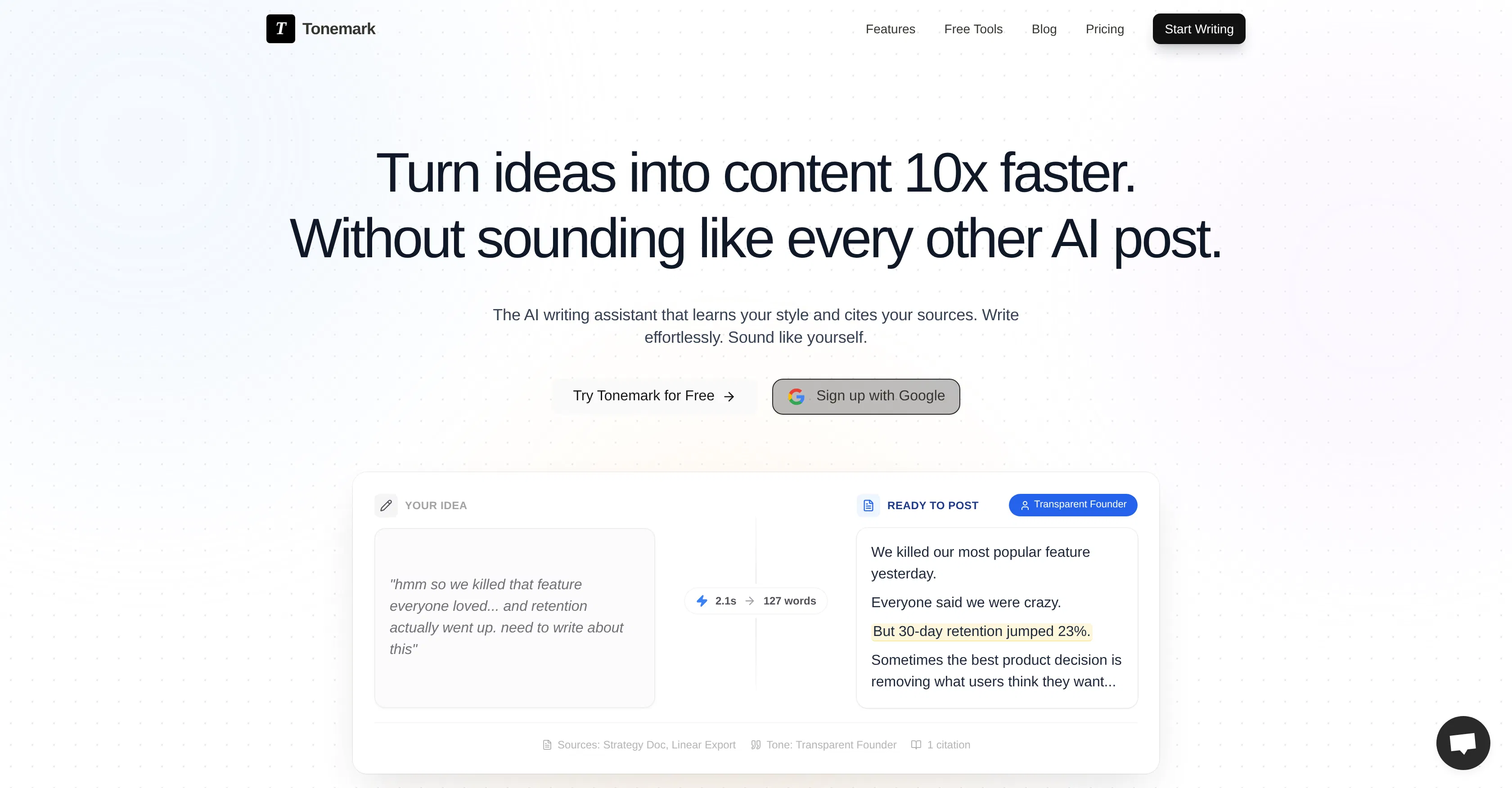
Tonemark is an AI writing assistant that helps create natural content and publish it directly to LinkedIn and X social networks. Its key value lies in its ability to learn and adapt to the user's unique writing style, ensuring consistency with personal or corporate branding. The tool is designed to overcome the templated nature common to many text generators, emphasizing personalization and authenticity of the final output.
Key features: The AI assistant analyzes the user's previous posts to generate new content in a similar style and tone. It offers a source citation feature, which enhances the credibility of created materials. The tool allows scheduling and direct publishing of prepared posts to LinkedIn and X (formerly Twitter) without needing to switch between platforms. Templates for various content formats, editing tools, and text optimization features for specific social media audiences are also available.
A distinctive feature of Tonemark is deep learning based on user-provided texts, enabling it to mimic individual language patterns, including vocabulary, sentence length, and even sense of humor. Technically, it's a web application that works through a browser, with API integration capabilities. The model continuously trains on user data, improving the relevance and uniqueness of each new suggestion or completed post. The platform focuses on data security and gives users control over how their style is used for training.
Ideal for marketers, content managers, entrepreneurs, and experts who are active on professional social networks and need a constant flow of high-quality, personalized content. The tool is effective for corporate blogs, personal branding, and for SMM specialists who need to maintain a consistent communication tone and save time on routine post writing. Tonemark is particularly useful for those seeking to preserve voice authenticity in automated content, avoiding generic template publications.