
Wallet AI
Analyzes millions of data points to deliver location-based financial advice for smarter spending and saving decisions.
Are you the owner?
Claim this tool to publish updates, news and respond to users.
Sign in to claim ownership
Sign InDescription
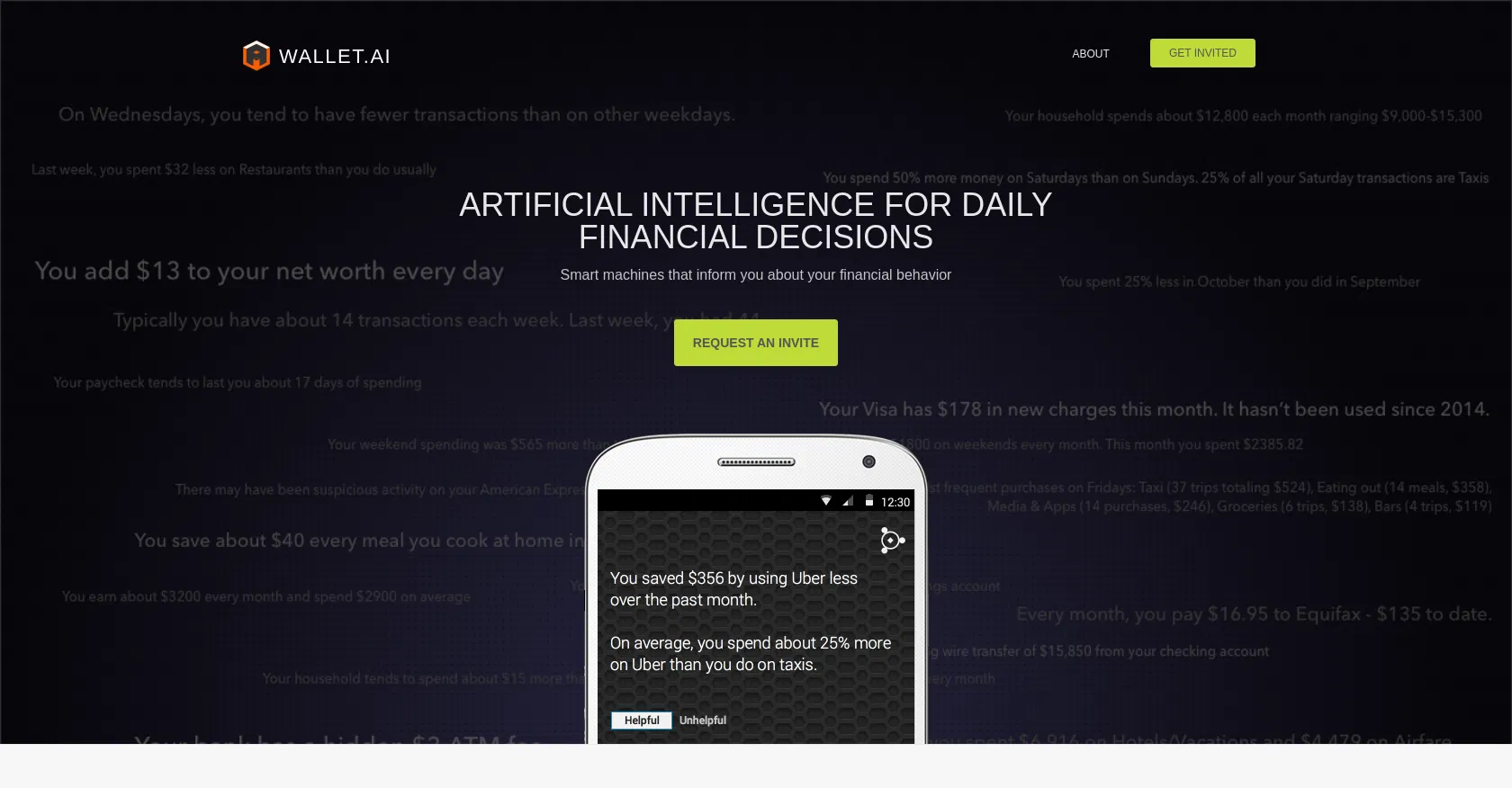
Wallet.AI is an intelligent financial engine developed by a San Francisco-based company to help individuals make more informed and beneficial financial choices. By processing vast amounts of personal and contextual data, it provides actionable insights aimed at improving spending habits and financial health. The core value proposition lies in transforming raw data into personalized, location-aware financial guidance, thereby empowering users to optimize their daily economic decisions.
Key features include the continuous analysis of transaction patterns, real-time spending alerts based on geographic location, predictive budgeting advice, and identification of potential savings opportunities. The tool monitors financial behavior against local economic conditions, offers suggestions for cost-effective alternatives nearby, and can forecast short-term cash flow needs. It also provides summaries of financial health and flags unusual spending activities that may warrant attention.
What sets Wallet.AI apart is its sophisticated focus on hyper-contextual, location-based intelligence, moving beyond generic budgeting to offer advice tied to a user's immediate physical and economic environment. Technically, it employs machine learning algorithms to parse millions of data pieces, including transaction histories and local merchant information. The platform primarily operates via mobile applications, integrating with bank accounts and financial services through secure APIs to gather necessary data while maintaining user privacy.
Ideal for individuals seeking to gain better control over their personal finances without deep financial expertise, as well as for banks and financial institutions looking to enhance their customer analytics and advisory services. Specific use cases include helping users avoid overspending in specific neighborhoods, suggesting cheaper dining or shopping options in real-time, assisting with daily budget adherence, and providing banks with deeper insights into customer spending patterns to offer tailored products.