Watermarkly
Automatically detects and blurs faces, license plates, and sensitive objects in images to protect privacy.
Are you the owner?
Claim this tool to publish updates, news and respond to users.
Sign in to claim ownership
Sign InDescription
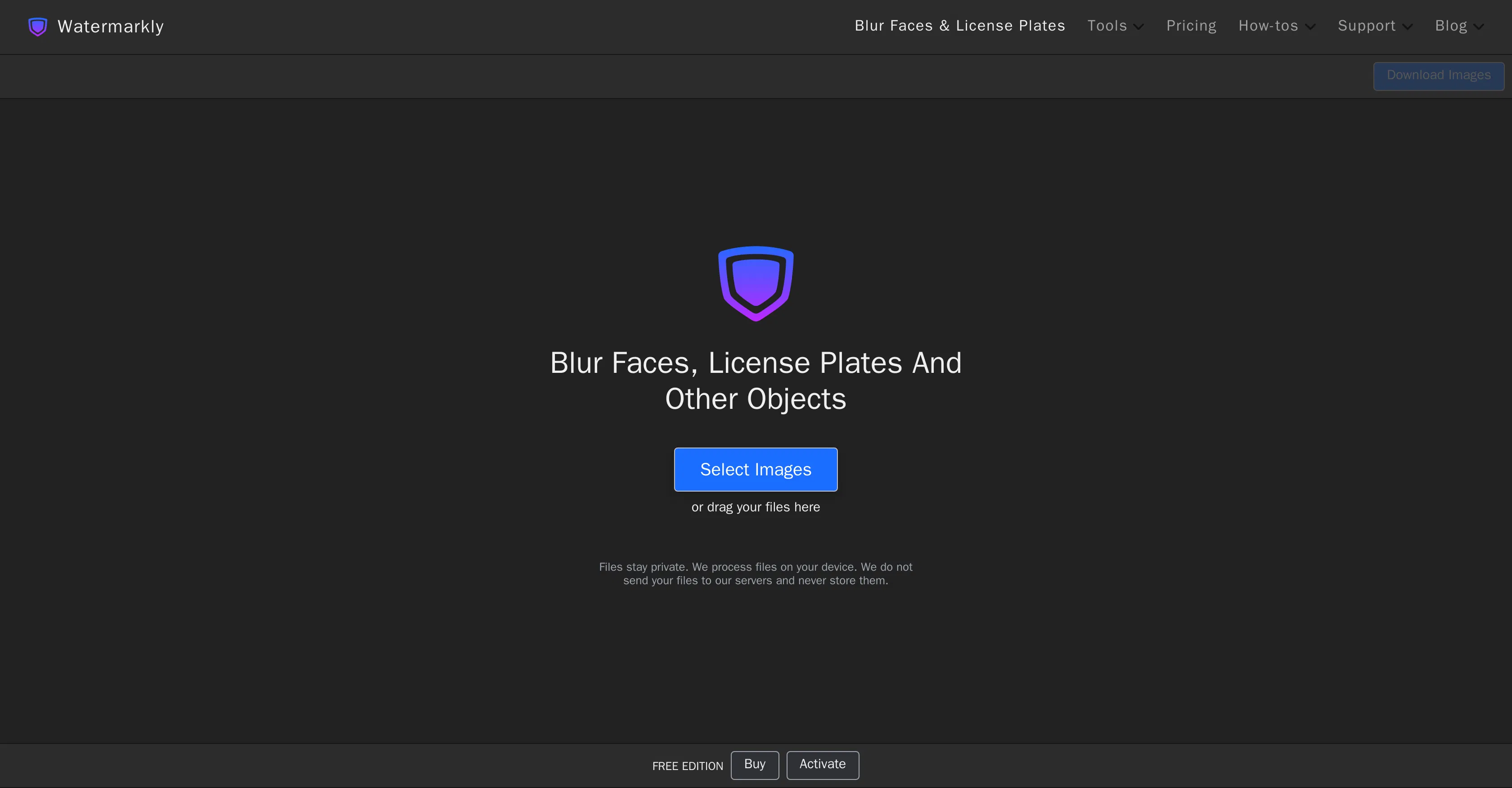
Watermarkly is an AI-powered online tool specifically designed for image anonymization and privacy protection. Developed by the Watermarkly team, its core value lies in automating the tedious manual process of obscuring sensitive information, allowing users to quickly prepare images for safe sharing in contexts where personal data must be concealed, such as public reports, real estate listings, or news articles. By leveraging advanced computer vision models, it removes the need for precise manual selection, saving significant time and reducing the risk of human error.
Key features include the ability to batch process multiple images simultaneously, significantly speeding up workflows for large projects. The AI automatically detects and applies blurring to human faces and vehicle license plates with high accuracy. Users retain full control with manual adjustment options to refine the blur area, intensity, and shape. The tool supports a wide range of common image formats for import and export, ensuring compatibility with most digital workflows. Additionally, it offers basic editing functions like cropping and resizing, making it a versatile utility for quick image preparation.
What sets Watermarkly apart is its focused simplicity and web-based accessibility; it requires no software installation and runs directly in a modern browser, making it platform-agnostic and instantly available. The underlying AI model is continuously refined to improve detection accuracy for various angles and lighting conditions. While it lacks deep integrations with other platforms, its straightforward export function allows processed images to be easily used elsewhere. The processing is performed locally in the user's browser for single images, enhancing privacy, while batch operations may utilize secure cloud processing.
Ideal for journalists and bloggers who need to publish images from public events while protecting individuals' identities. Real estate agents can use it to blur out personal belongings and license plates in property photos. Researchers and academics find it valuable for anonymizing participant data in published studies. Small business owners and social media managers can ensure compliance with privacy regulations when showcasing customer testimonials or workplace photos. It is also a practical tool for any individual wanting to share personal photos online without exposing sensitive details about friends, family, or their location.
Similar Tools