
Well Trade AI
Analyzes stock market data and generates AI-powered trading signals for informed investment decisions.
Are you the owner?
Claim this tool to publish updates, news and respond to users.
Sign in to claim ownership
Sign InDescription
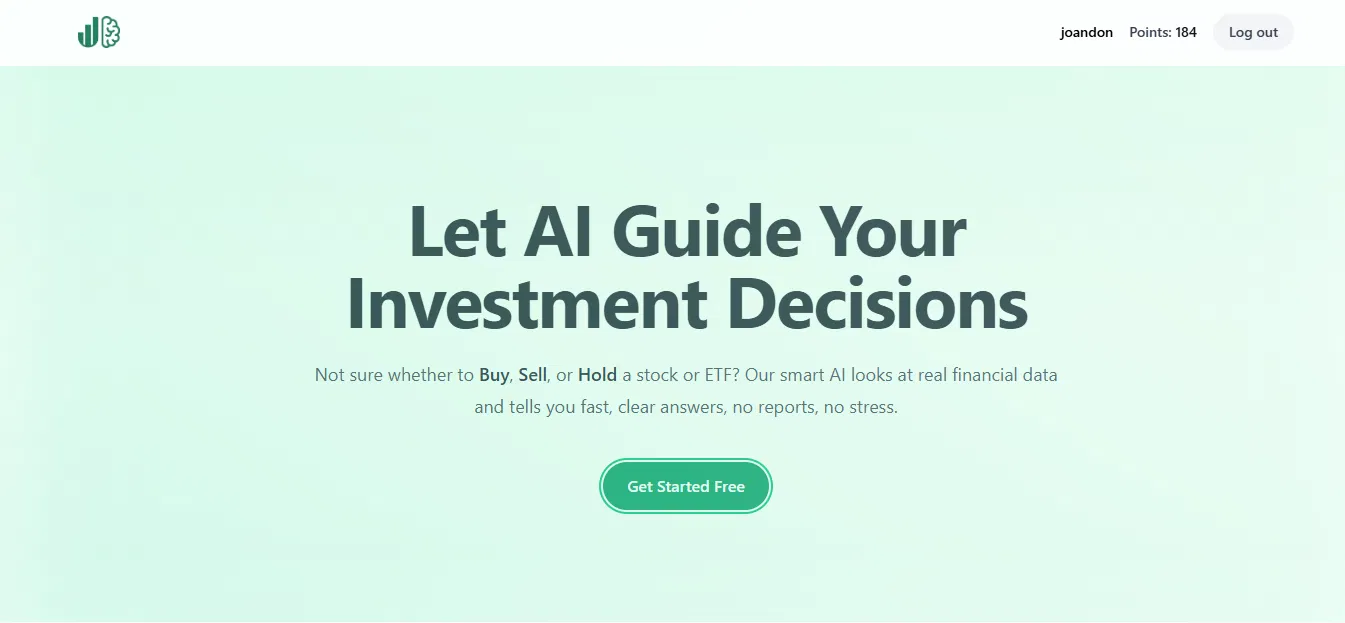
Well Trade AI is an advanced analytical platform designed to empower investors and traders by providing AI-driven insights into the stock market. Developed by a team specializing in quantitative finance and machine learning, its core value lies in transforming complex market data into clear, actionable trading signals, helping users navigate volatility with greater confidence. The tool aims to democratize access to sophisticated analysis that was once the exclusive domain of institutional investors.
Key features include the generation of daily AI-powered buy and sell signals for a wide range of stocks and ETFs, complete with confidence scores and projected price targets. It offers real-time market sentiment analysis, aggregating news and social media data to gauge investor mood. The platform provides detailed technical and fundamental analysis summaries for each asset, and includes customizable watchlists with automated alerting for when specific trading conditions are met by the AI models.
What sets Well Trade AI apart is its proprietary ensemble of machine learning models that analyze both quantitative data (like price and volume) and qualitative data (like news sentiment) to produce its signals. The platform operates entirely as a web application, requiring no software installation, and is optimized for both desktop and mobile browsers. It focuses purely on analysis and signal generation, offering clear rationale for each recommendation without executing trades, making it a decision-support tool rather than a brokerage.
Ideal for retail investors seeking a data-driven edge, day traders looking for timely signal alerts, and long-term investors wanting to validate their stock picks with AI analysis. Specific use cases include screening for new investment opportunities based on AI momentum signals, receiving alerts for potential exit points in a current portfolio, and using the sentiment analysis to understand the broader market narrative affecting specific sectors or stocks before making a move.