TTSMaker
Converts text to natural-sounding speech in over 100 languages and voice styles online.
Are you the owner?
Claim this tool to publish updates, news and respond to users.
Sign in to claim ownership
Sign InDescription
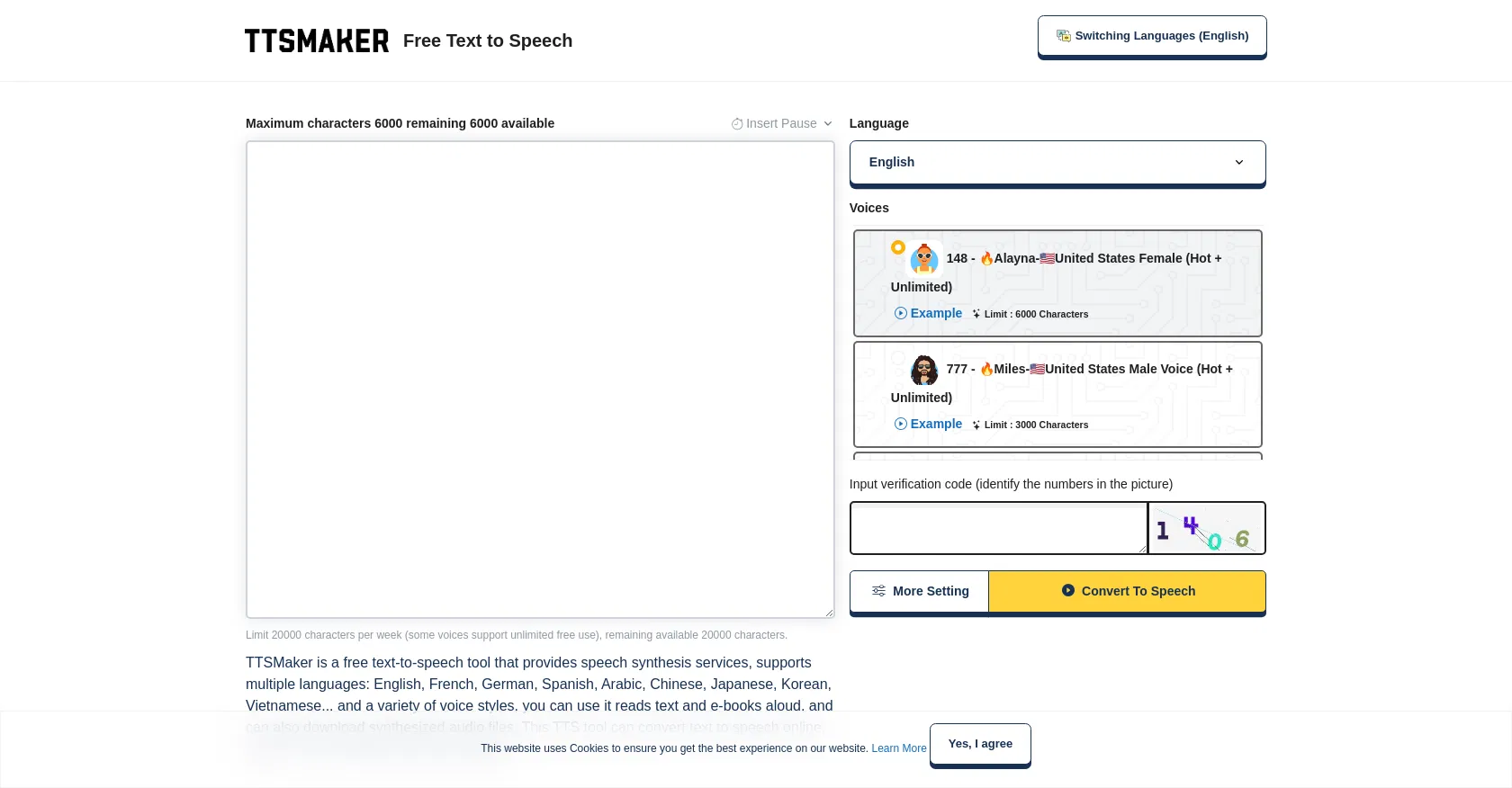
TTSMaker is a comprehensive online text-to-speech service that leverages advanced neural network technology to deliver high-quality, natural-sounding audio from written text. Developed to be accessible and powerful, its primary value lies in providing a free, user-friendly platform for instant speech synthesis across a vast array of languages and accents, making professional-grade voice generation available to everyone without the need for complex software or significant investment.
Key features include support for over 100 languages and dialects, a wide selection of distinct voice styles including male, female, and various emotional tones, the ability to adjust speech parameters such as speed, pitch, and volume, and the functionality to download generated audio in multiple formats like MP3 and WAV. The service also allows for batch text processing and offers an API for developers seeking to integrate speech synthesis into their own applications or workflows seamlessly.
What sets TTSMaker apart is its powerful underlying neural network architecture, which produces remarkably fluid and human-like intonation compared to older concatenative systems. It operates entirely online through a web browser, requiring no downloads or installations, and emphasizes ease of use with a straightforward interface. While it offers a robust freemium model, its technical prowess is evident in the quality of its free tier, which is sufficient for many personal and educational purposes. The tool is designed for broad accessibility rather than deep platform integrations, focusing on delivering core TTS functionality effectively.
Ideal for content creators needing voiceovers for videos or podcasts, educators developing multilingual learning materials, developers prototyping applications with voice feedback, and individuals requiring audio versions of documents for accessibility or convenience. Specific use cases include creating audiobook snippets, generating narration for e-learning modules, producing audio alerts for systems, and assisting visually impaired users by converting written content into spoken word, all facilitated by its extensive linguistic library and intuitive design.