Soniox Speech-to-Text AI
Converts speech to text with high accuracy and real-time capabilities for developers and businesses.
Are you the owner?
Claim this tool to publish updates, news and respond to users.
Sign in to claim ownership
Sign InDescription
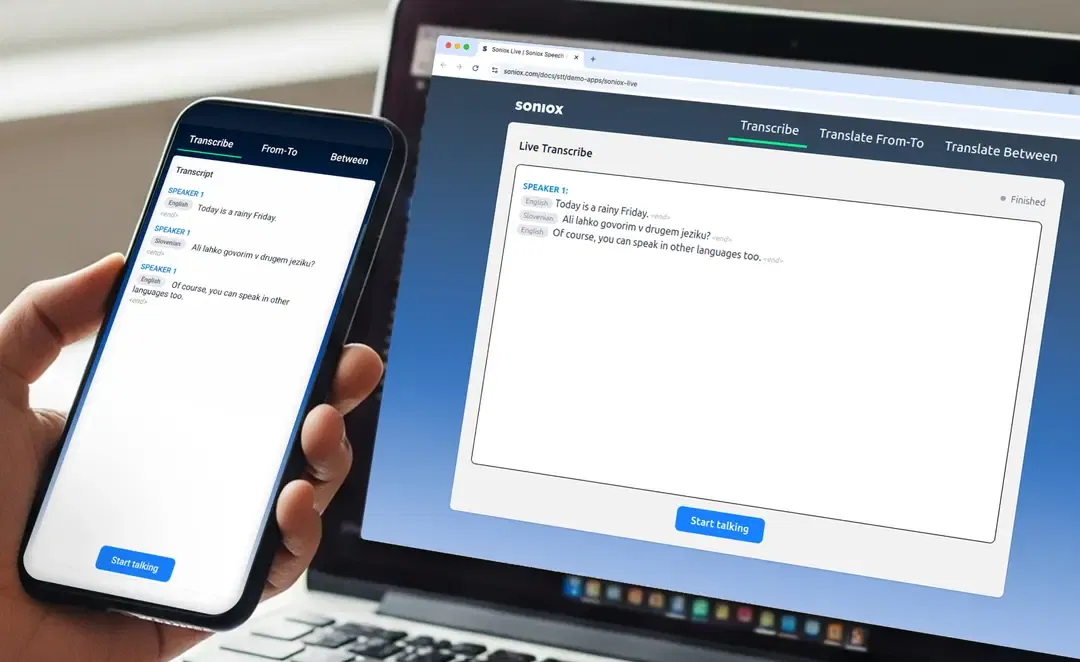
Soniox Speech-to-Text AI, developed by Soniox, is a powerful API service that provides advanced automatic speech recognition. It delivers highly accurate transcriptions from audio and video files, as well as live audio streams, making it a valuable asset for applications requiring reliable and scalable speech-to-text conversion. The core value lies in its combination of precision, low latency, and developer-friendly integration, enabling teams to add sophisticated voice capabilities to their products without building complex in-house models.
Key features: The service offers real-time streaming transcription with very low latency, which is crucial for live captioning and interactive voice applications. It supports speaker diarization, automatically identifying and separating different speakers in a conversation. The API provides word-level timestamps for precise alignment of text to audio, and includes advanced options for custom vocabulary to improve accuracy with domain-specific terms like technical jargon or product names. It also features profanity filtering and the ability to handle various audio formats and qualities directly.
What makes it unique is its underlying AI model, which is trained on a massive and diverse dataset to handle different accents, dialects, and noisy environments effectively. The platform is cloud-based and accessible via a straightforward REST API and WebSocket for streaming, allowing for seamless integration into web and mobile applications. It does not require complex local installations and scales automatically with demand. While it lacks a direct consumer-facing interface, its strength is as an embedded service for developers building voice-enabled features, analytics tools, or content management systems.
Ideal for software developers and engineering teams who need to integrate speech recognition into their applications, such as for creating meeting transcription tools, voice-controlled interfaces, or media subtitling services. It is also highly suitable for businesses in media, legal, customer service, and education sectors that require automated transcription of interviews, calls, lectures, or podcasts to improve accessibility and content searchability. Content creators and analysts can use it to quickly generate searchable text from audio and video archives.